The video game industry has a new party trick: conjuring a scandal out of thin air, slapping a "reportedly" on it, and watching the internet lose its collective mind. Back in 2024, S-GAME—the studio behind the upcoming action RPG Phantom Blade Zero—found itself starring in exactly that kind of circus. A rumor slithered onto the scene claiming that someone at S-GAME had said the studio didn't need Xbox. No official interview, no verified quote, just a whisper that somehow learned to shout.
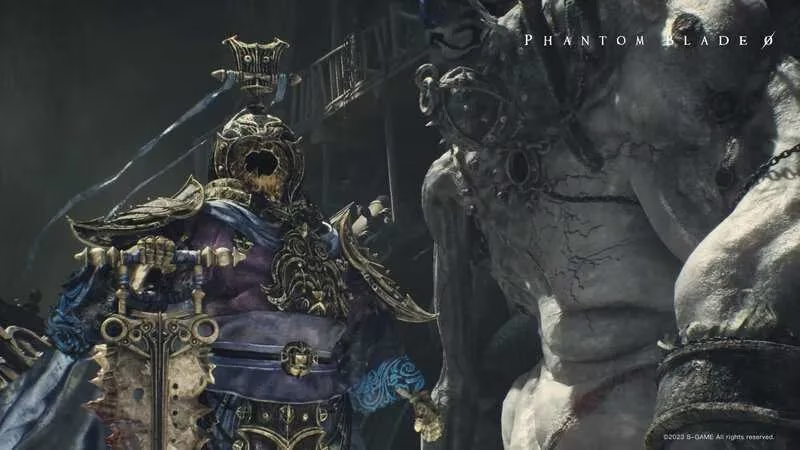
S-GAME, bless its patient heart, promptly shut that down. The studio explained it hadn't ruled out any platforms and said the alleged statements didn't represent its values or culture. In other words: thanks for the concern, but please stop putting words in its mouth. That should have been the end of it. Of course, it wasn't.
Enter Dan Ahmad, a director of research and insights at Niko Partners, better known online as ZhugeEx. Dan decided to play detective, and what he found was less "smoking gun" and more "smoking laptop." He said he was about 95% certain the quote first appeared on August 1, 2024, on a website that uses generative AI to scrape the internet and pump out articles. From there, a Chinese media outlet picked it up, and the rumor went from digital tumbleweed to trending topic. Dan admitted he couldn't know for sure whether a dev said something offhand. Fair enough. But the sourcing, the lack of an official interview, and the AI-site origin made him believe it was fake.
Let's be real: this is not just a Phantom Blade Zero problem. It's a games media problem. It's a gamer problem. It's an "everyone needs to touch grass and verify a quote" problem.
The Anatomy of a Fake Story 🕵️
Here's how the sausage gets made in the AI era:
| Step | What Happened |
|---|---|
| 1️⃣ | An AI-powered content farm scrapes rumors, forum posts, and half-baked takes. |
| 2️⃣ | It generates a "news" article that sounds plausible enough to share. |
| 3️⃣ | A real media outlet picks it up without checking the source. |
| 4️⃣ | Social media does its thing: outrage, console war bait, and hot takes. |
| 5️⃣ | The studio denies it, but the damage is already memed into existence. |
The scary part? Nobody needed a source. They just needed a narrative that people wanted to believe. Console warriors wanted drama. AI content farms wanted clicks. The algorithm wanted engagement. And the truth, poor thing, was left standing outside the party, holding a lukewarm soda.
Why This Matters in 2026 🚨
Two years later, in 2026, the problem hasn't magically vanished. If anything, generative AI has gotten smoother, faster, and more convincing. It can mimic a journalist's tone, a developer's voice, and a fan's outrage. That's a dangerous cocktail. The Phantom Blade Zero incident wasn't the first AI-fueled rumor, and it won't be the last. But it's a perfect case study in how misinformation travels: AI site ➡️ media outlet ➡️ social media ➡️ public discourse. By the time the denial arrives, the fake quote has already been screenshotted, subtweeted, and turned into a YouTube essay.
What's concerning is how easily people accepted it. Sure, some folks saw the red flags. Some didn't. And that's the thing: it's not on the accused studio to prove a negative. It's on the reporters, the outlets, and the sharers to verify that a quote actually happened. Did anyone contact the alleged interviewer? Did anyone confirm the staffer existed? Did anyone ask for a transcript? Apparently not. The bar was so low it was doing limbo under a snake.
How to Avoid Getting Played 🧠
The good news? Readers aren't helpless. Here's a quick survival guide:
-
Check the source. If the only citation is "a website," that's not a source. That's a sneeze.
-
Look for official statements. Studios usually deny or confirm via their own channels.
-
Be suspicious of perfect narratives. If a story confirms exactly what a reader already believes, slow down.
-
Watch for AI tells. Weird phrasing, no byline, no direct quotes, and a suspiciously broad headline are clues.
-
Don't share first, verify first. Retweets are not research.
GameRanx, for its part, has admitted it isn't perfect. Nobody is. But the outlet did spot the issues with this story, and that's the point: media literacy is a muscle. A person has to use it, or it turns into jelly.
So here's the uncomfortable truth: AI can now manufacture the news gamers want to hear. It can invent a quote, dress it up as reporting, and let the internet do the rest. That means the burden is on all of them—journalists, readers, and yes, even the console warriors—to be vigilant. S-GAME shouldn't have had to debunk a ghost. Phantom Blade Zero shouldn't have been dragged into a fake platform war. And the rest of the public shouldn't be so easy to fool.
The internet, that caffeinated parrot, will keep squawking. The question is whether people keep repeating what it says, or start asking, "Wait, who told you that?" 👀