I still remember the exact moment my 2024 gaming calendar collapsed under an avalanche of colossal, time-devouring worlds. It was February, just after S.T.A.L.K.E.R. 2 had planted its radioactive hook in my brain, when my phone buzzed with a reminder that Final Fantasy 7 Rebirth was dropping the very same week. Both games demanded I explore every pixel. Both looked utterly irresistible. That was the moment I realized I needed a strategy—or at least a well-caffeinated sense of adventure.
Let me take you back, from my now-cozy 2026 hindsight, into the madness of a year that seemed purpose-built to annihilate anyone’s backlog—and sleep schedule.
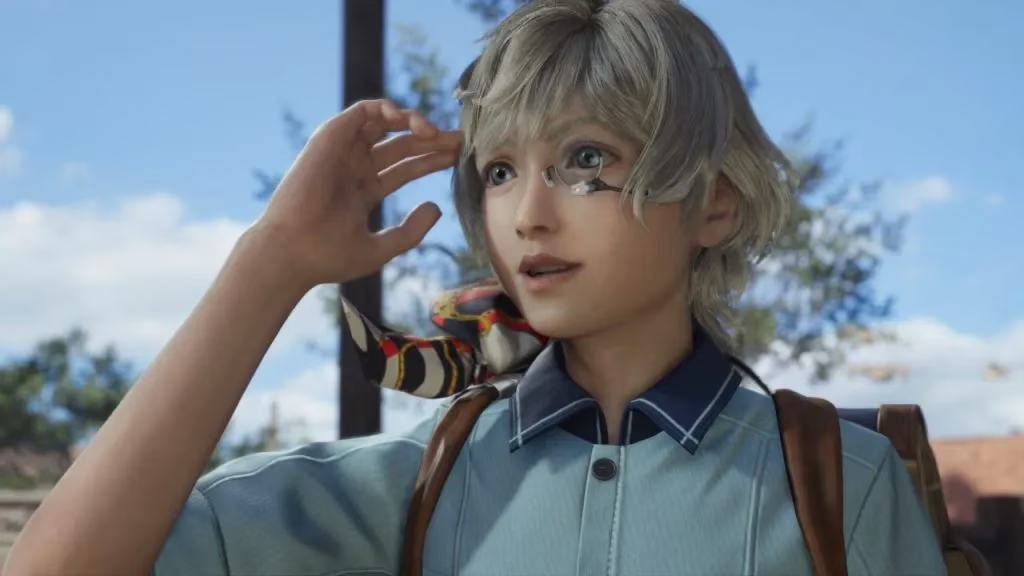
My journey started with Final Fantasy 7 Rebirth. I had finished Remake in 2020 and thought I knew what to expect. I was so wrong. The moment the Grasslands opened up under that iconic sky, I abandoned the main quest for nearly ten hours. I rode chocobos, hunted fiends for Chadley, and collected every lifespring like a mad botanist. Each region felt like a completely different planet—from the dense forests of Gongaga to the sun-scorched wastes of Corel—with traversal mechanics so distinct I often forgot I was playing the same game. The sheer barrage of side content never felt like bloat; it felt like the game was gently nudging me to live inside its world.
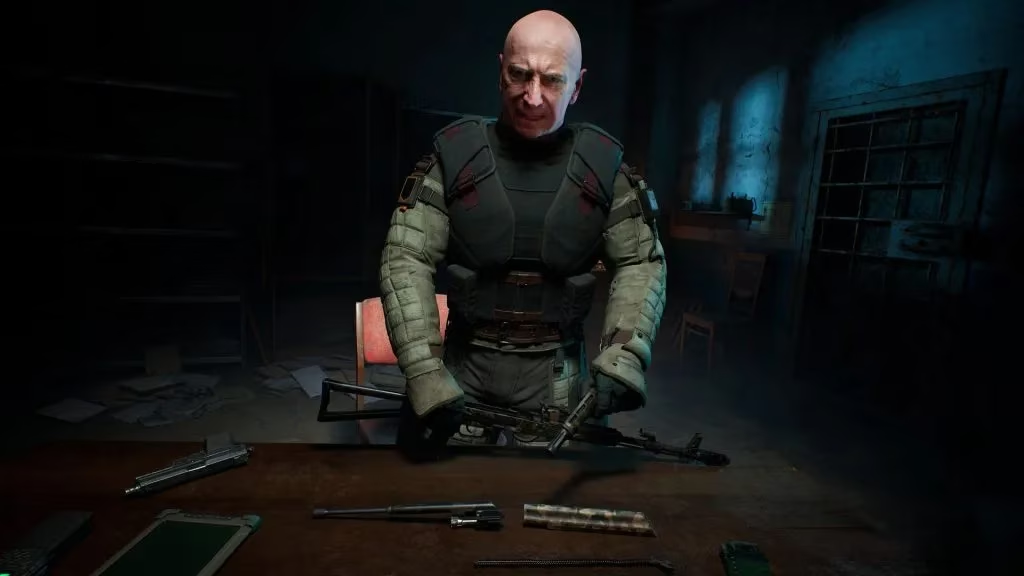
Then came February’s other monstrous arrival: S.T.A.L.K.E.R. 2: Heart of Chornobyl. This was the opposite of Rebirth's colorful odyssey—a brutal, unforgiving Exclusion Zone covering over 60 square kilometers. I remember crawling out of a swamp at 2 a.m., my heart still thumping from a bloodsucker ambush, and checking the map to realize I’d only uncovered about a fifth of the 20 distinct regions. The map was gargantuan, yes, but it was the density of stories hidden in crumbling labs and abandoned apartments that truly swallowed my time. Every rusted locker held a potential upgrade. Every horizon beckoned with a new anomaly to curse or a familiar location from the old games, now twisted and expanded.
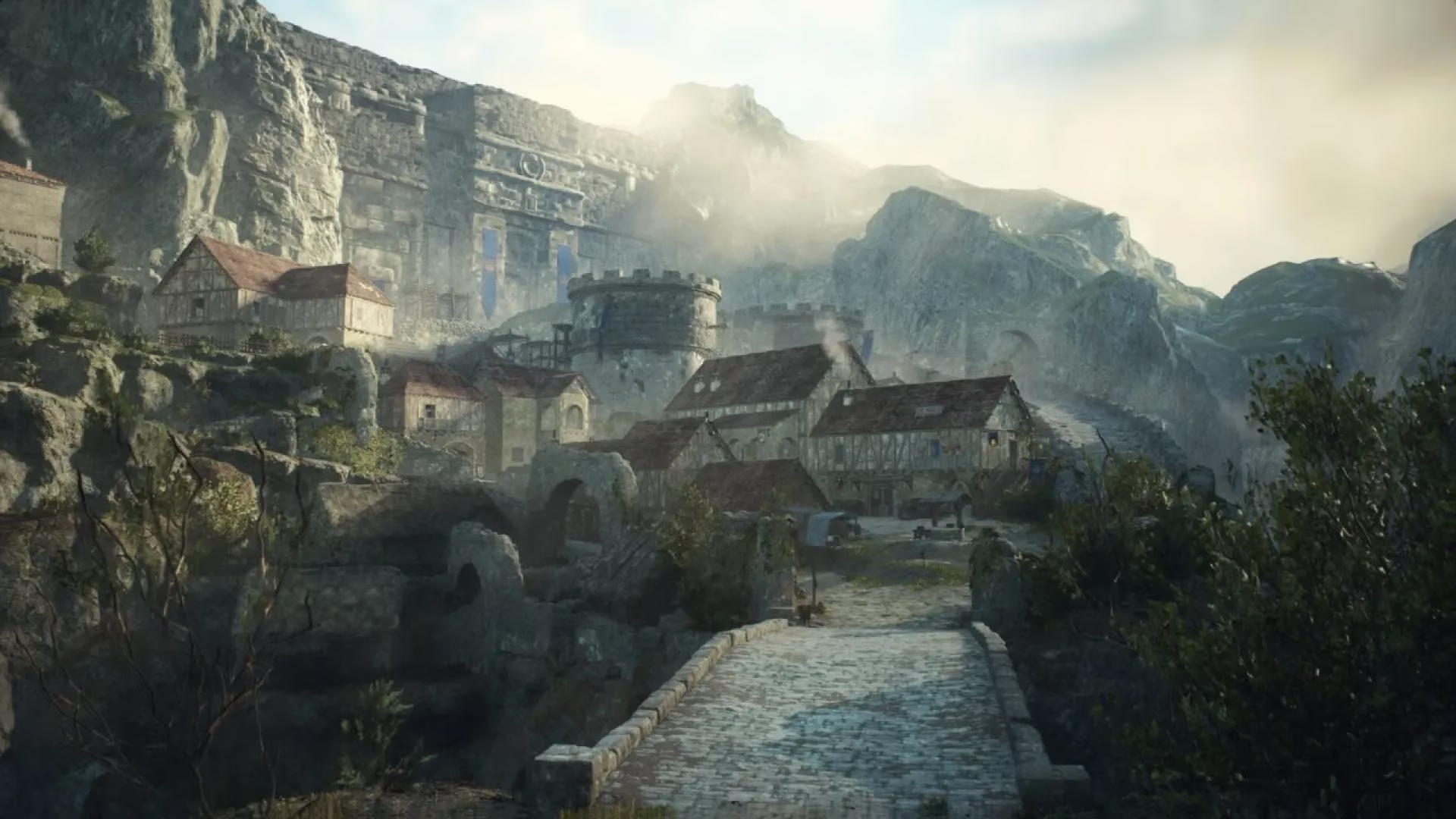
By spring, my brain craved a different kind of scale. Enter Dragon’s Dogma 2. This game didn’t hold my hand; it grabbed my wrist and threw me into a griffin attack at midnight. Its open world sang with emergent chaos. I spent one whole Sunday simply wandering from Vermund’s lush valleys to Battahl’s harsh deserts, with my pawns bickering about harpies while I fought a drake that crashed through a bridge. The map wasn’t the biggest on paper, but the systems-driven sandbox made every square meter unpredictable. I’d intended to reach a city by dusk. I ended up in a labyrinth of canyons, discovering a cyclops I hadn’t seen in any trailer. That’s how Dragon’s Dogma 2 operated—it turned exploration into an endless first-person anecdote generator.
Around this time, the multiplayer survival sector exploded with Once Human. I convinced my squad to try this post-apocalyptic behemoth, and its 16x16 km map split into wildly different biomes became our home for months. We built a mobile base that looked like a mechanical crab, fled from a reality-bending stardust pollution zone, and got lost in a snowy expanse that seemingly had no end. What stuck with me was the variety: the rustpunk desert gave way to a lush, alien forest, which then plunged into a bleak industrial hellscape. The map wasn’t just huge—it was a chameleon.
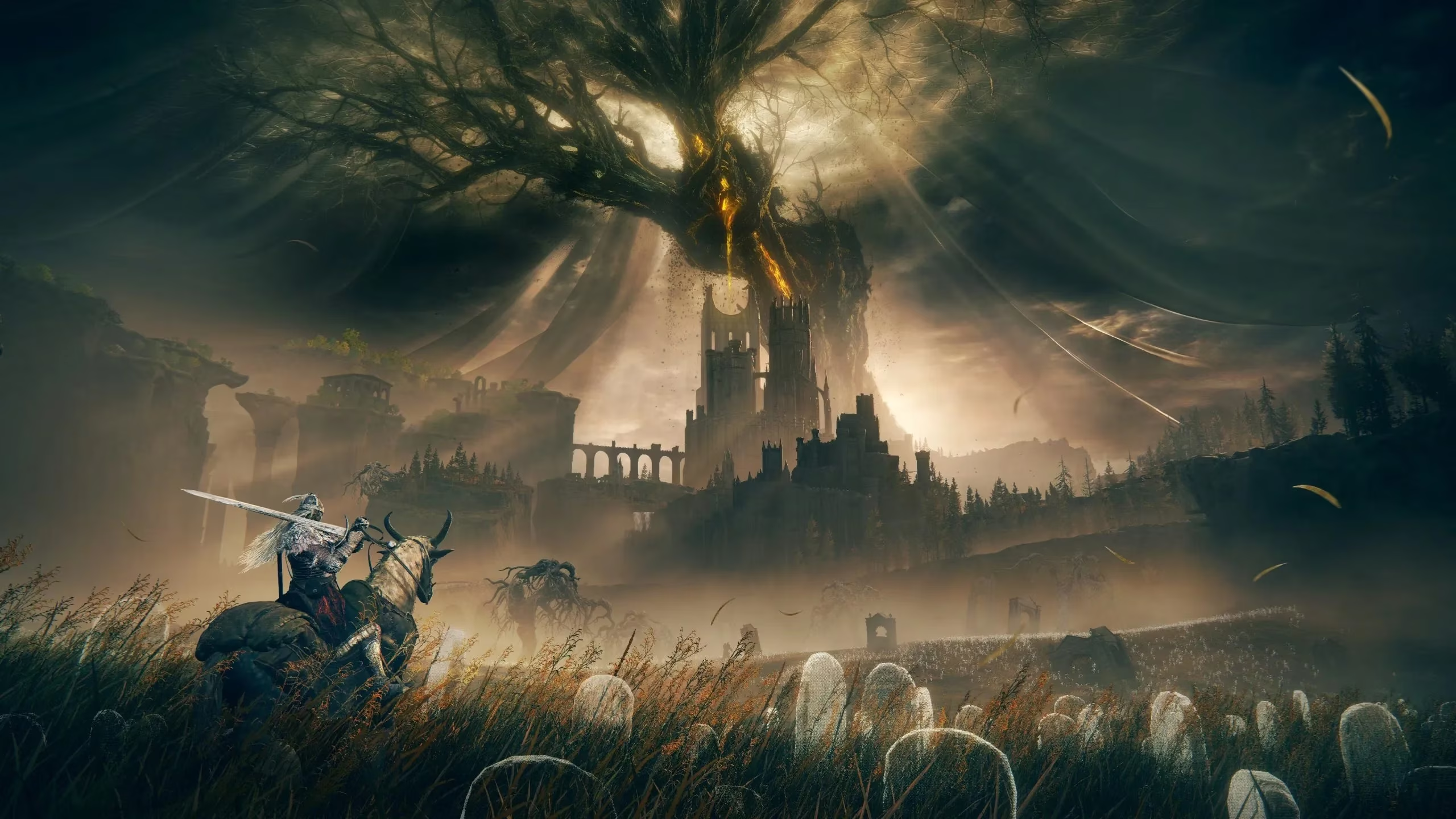
When Elden Ring: Shadow of the Erdtree finally arrived in June, I told myself I’d be efficient. That lasted until I stumbled into the Cerulean Coast. The Land of Shadow was not a quick expansion; it was a new continent wrapped in a nightmare. The verticality alone could drive a cartographer insane. I descended into fissures, scaled ruins that spiraled into the clouds, and repeatedly died to a fiery giant that guarded a field of ghostly lilies. Even now, in 2026, I’m not certain I uncovered every secret. The level design was so meticulous that ignoring a single suspicious wall felt like a sin.
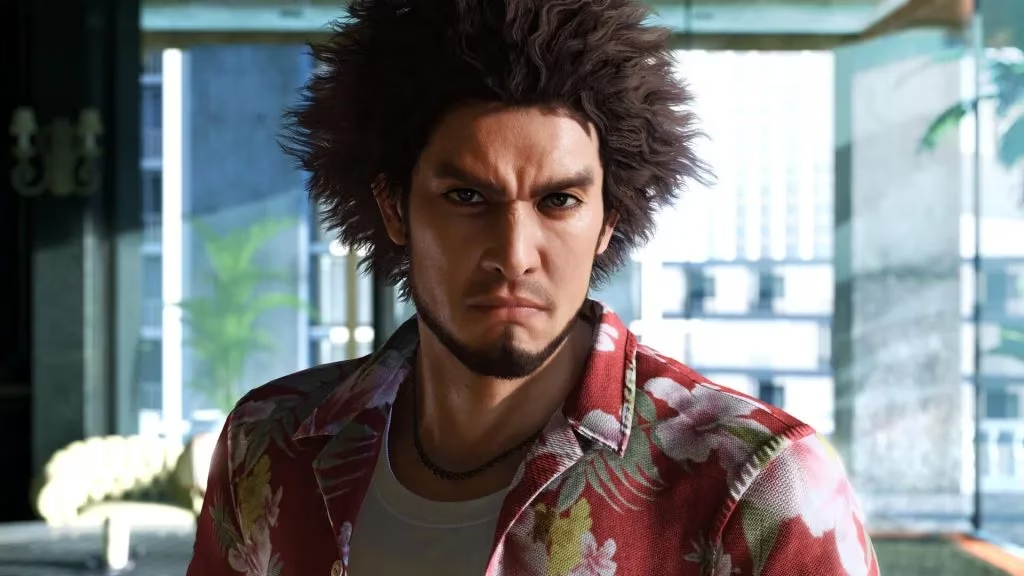
Summer demanded a change of pace, so I boarded a flight to Hawaii in Like a Dragon: Infinite Wealth. This was a masterclass in density over sheer square mileage. Waikiki wasn’t the largest open world, but every storefront had a substory, every alley a hidden minigame. I spent 15 hours managing an island resort, learned a new dance battle system, and sobbed through a karaoke session. The map encouraged idle strolling; I’d start a mission and end up racing pocket circuit cars or befriending a stray hermit crab. Infinite Wealth proved that a world doesn’t need to be a continent to feel endless—it just needs to be alive.
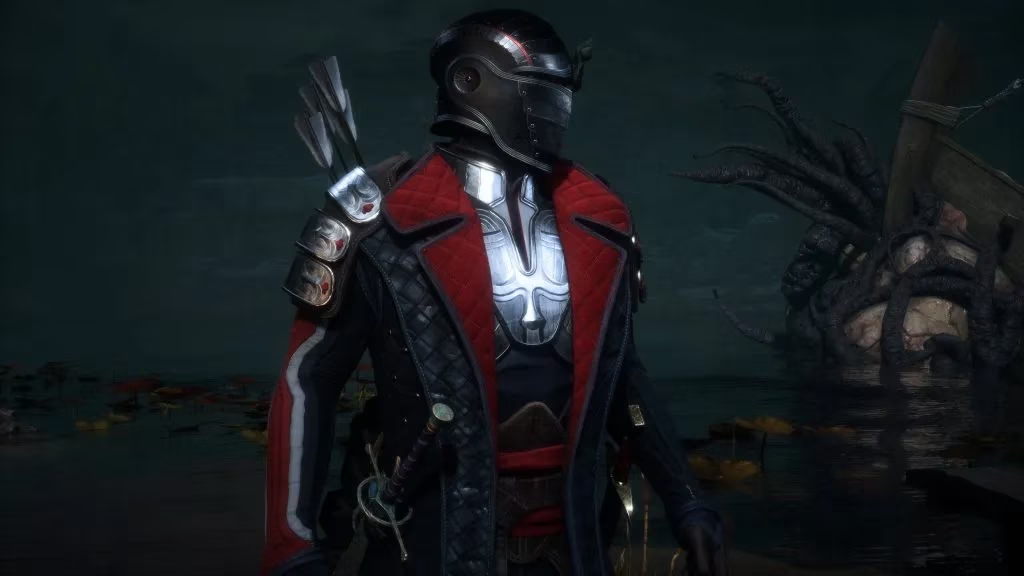
Late 2024 introduced me to games that challenged the open-world definition. Black Myth: Wukong may have been level-based, but its sprawling, interconnected chapters felt like a world I could physically inhabit. I’d backtrack through snowy mountains and find a hidden boss behind a waterfall, extending my playtime past 60 hours. Similarly, Dragon Age: The Veilguard ditched Inquisition’s exhausting zones for focused, semi-open maps that rewarded thorough exploration without the fatigue. I’d clear a mission in bustling Minrathous, then spend an hour unlocking a labyrinthine necropolis, the largest Thedas has ever felt.
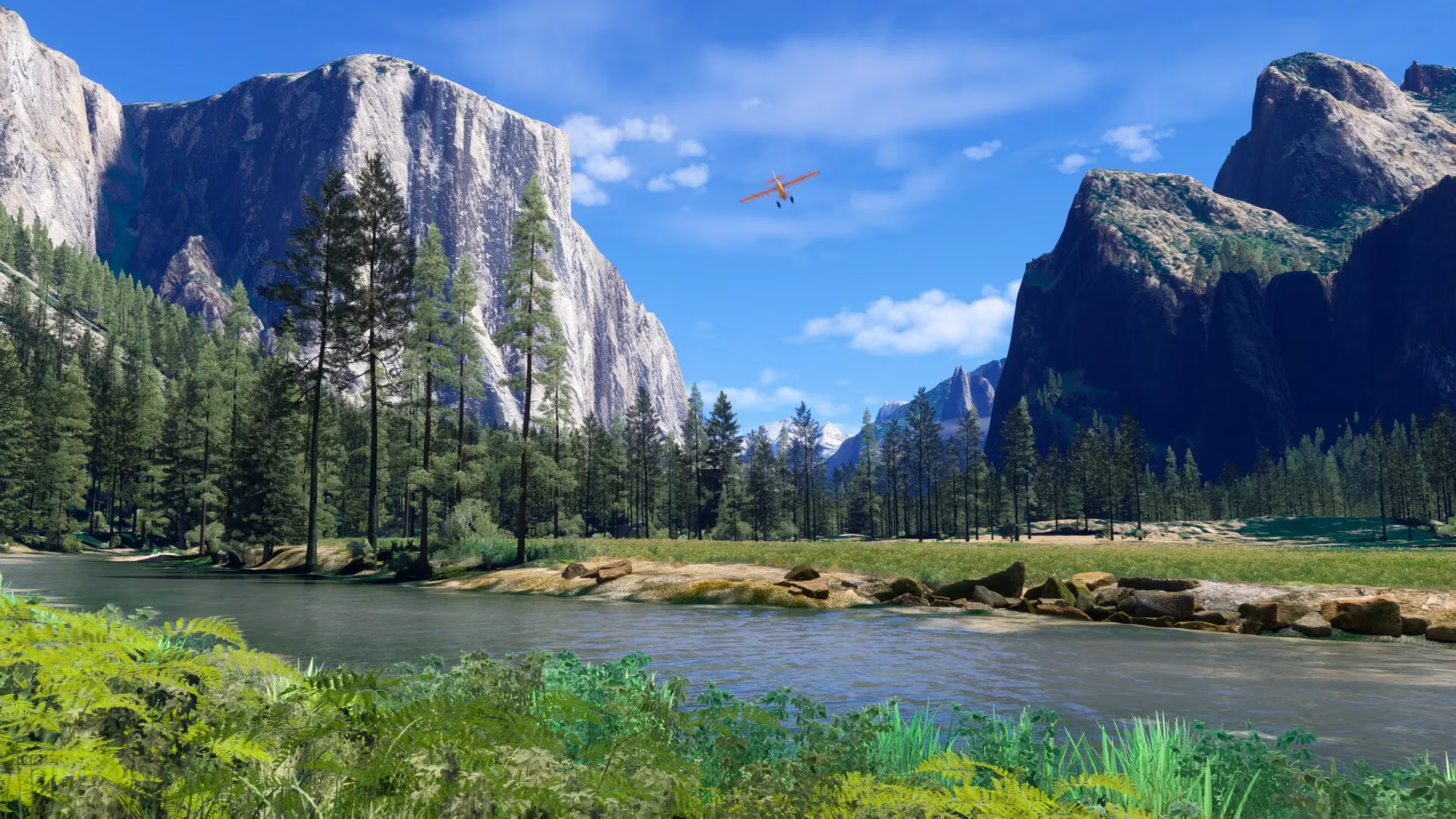
Two outliers deserve a shoutout. Star Wars Outlaws surprised me by respecting my time. Kay Vess’s galaxy felt organic—none of the planets were too large, and the lack of a million map icons meant I explored because I wanted to, not because a checklist demanded it. And I can’t forget Microsoft Flight Simulator 2024, which casually simulated the entire Earth. A friend and I spent a rainy evening flying over our own neighborhood, pointing at our houses in unnerving, photorealistic detail. It was a gentle reminder that the biggest world doesn’t have to be conquered—sometimes just looking out the virtual window is enough.
Looking back from 2026, I can’t believe I juggled all these worlds without my real life crumbling. Games like Satisfactory (which left early access in September) taught me that even a factory sim could deliver vast, hostile wilderness worth exploring. Sons of the Forest turned every tree line into a heart-pounding horror show. Dragon Quest 3 HD-2D Remake proved that a classic overworld could still feel grand. And Rise of the Ronin and Lightyear Frontier gave me traversal tools—gliders, mechs, horses—so joyful that commuting became the main event.
2024 wasn’t just the year of big games. It was the year developers learned that a map’s size means nothing without soul. Whether it was the density of Infinite Wealth, the emergent chaos of Dragon’s Dogma 2, or the handcrafted verticality of Shadow of the Erdtree, these worlds left permanent marks on my gamer brain. And honestly? I’d do it all again—even if I’m still, two years later, trying to finish my Once Human base.