It was August 20, 2025, a date etched into the calendars of countless Xbox Series X|S owners who had spent the previous year watching PC and PlayStation players devour every frame of a golden monkey’s mythical journey. Game Science’s action‑RPG sensation, Black Myth: Wukong, had already shattered Steam records in 2024, roaring past 20 million sales in a single month and sitting proudly beneath an Overwhelmingly Positive badge from nearly 850,000 user reviews. Yet the Xbox version lingered in a quiet fog of optimization work and whispered rumors, promising polish but delivering only silence. When the download bar finally filled that August afternoon, the wait dissolved into the opening chapter of Black Wind Mountain – and for one player named Daniel, a folklore‑soaked adventure he’d only glimpsed through streams suddenly became his own.
Daniel had heard the chatter about Wukong’s combat loop likening it to a character‑driven action‑adventure more than a pure soulslike. Now, gripping his controller, he understood. The Destined One’s staff was his only weapon, yet it never grew stale. The very first Yaoguai he encountered taught him that combat was a dance of patience: dodge the wild swing, then smack the creature senseless with a flurry of light attacks until the screen blurred with golden sparks. There was no stamina bar punishing every sidestep, just the rhythm of reading tells and punishing openings. It felt tight, responsive, and every bit as spectacular as the trailers had promised. And the bosses – oh, the bosses. Daniel quickly realized why players had lovingly branded Wukong a “boss rush” experience. From the towering Wolf Demon to the lightning‑crazed Thunderclap Temple guardians, each encounter was a cinematic set piece dripping with Chinese mythology. Every victory unlocked a Transformation, a temporary metamorphosis into the fallen foe that added a visceral layer to his arsenal. Turning into a hulking wolf or a serpentine spirit wasn’t just a novelty; it became a strategic lifeline during the gauntlets ahead.
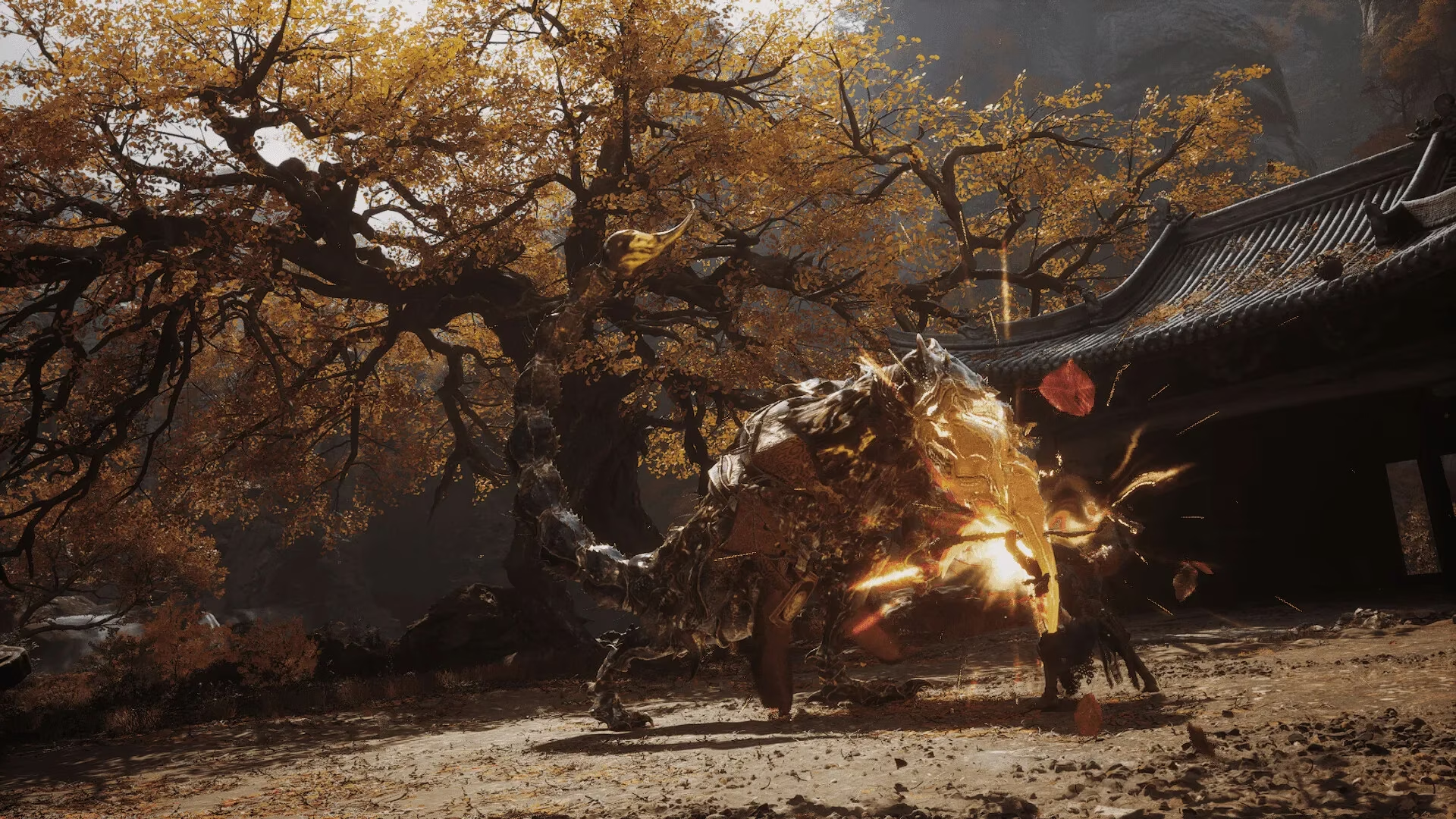
Exploration pulled Daniel deeper. Black Wind Mountain unfolded as a linear tutorial, all tangled bamboo and crumbling shrines, but soon the world splintered into labyrinthine forests and snow‑blind peaks. Hidden zones lurked behind invisible walls and crumbling altars, many guarded by optional bosses whose defeat rewarded exotic armor sets or rare crafting materials. Daniel spent an extra evening scouring the New West’s desert canyons, guided by a new feature the Xbox version launched with: the Journeyer’s Chart. Purchased from regional merchants, this parchment unfurled a detailed map that tracked his position, erasing the original release’s notorious lack of navigation. No more aimless wandering – he could now plot a route to that elusive side quest, the NPC who sold the curious snake‑oil, or the cave entrance that hummed with secret energy.
His combat style crystallized around the Stance system. Three disciplines – Smash, Pillar, and Thrust – branched from a single skill tree, each transforming his heavy attacks. At first, Daniel leaned on Smash for its mobile charge, barreling into foes like a storm. Then he discovered the elegance of Pillar Stance, climbing high onto the extended staff to evade sweeping claws before plummeting down in a thunderous overhead strike. By the time he unlocked Thrust Stance, he was threading the needle from impossible distances, his Focus gauge flaring with each successful light strike to supercharge that one decisive lunge. Focus became an obsession: build it, hold it, then release a heaven‑shaking heavy blow that sent lesser demons flying. The spell wheel only amplified his options. Immobilize froze an airborne boss mid‑lunge; Rock Solid parried a giant’s fist by briefly turning his body into an immovable boulder; and Pluck of Many spawned a small army of clones that swarmed adversaries in a brilliant homage to the Monkey King’s lore.
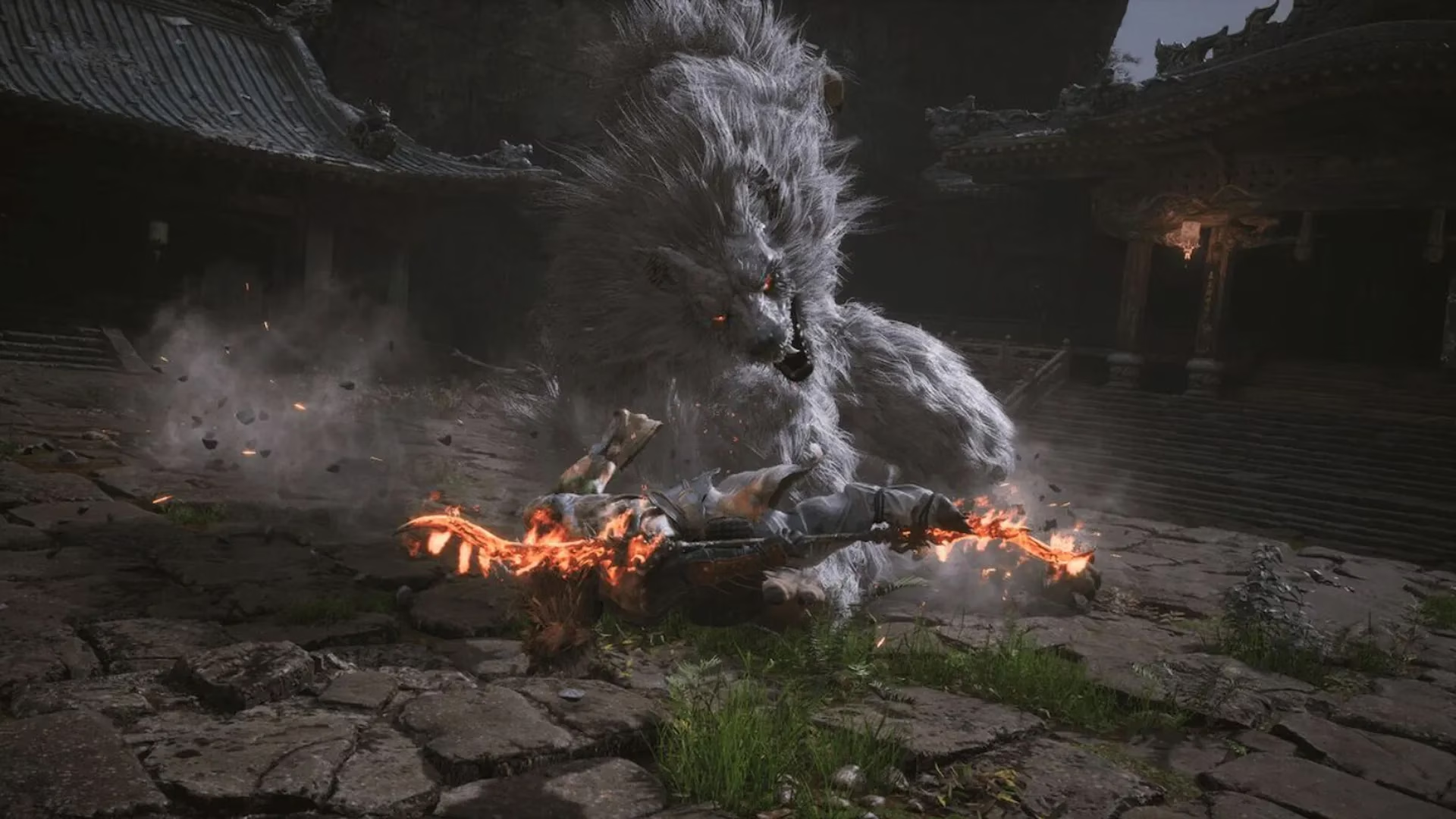
The Xbox edition also arrived with the full suite of post‑launch upgrades that had gradually bloomed on other platforms. Daniel became addicted to the Return of Rivals shrine, a mode that let him re‑challenge any vanquished boss at three escalating difficulty tiers. That Black Bear from Chapter 1? He fought it again, this time with its damage cranked up and his own healing gourd charges refusing to refill between bouts – a self‑imposed Curse from the Gauntlet of Legends mode. That Boss Rush gauntlet strung together waves of remixed adversaries; clearing each chain dropped rare curios and bragging rights. It transformed the late game into a replayable battlefield, perfect for those who judged their worth by the enemies they’d already humbled once.
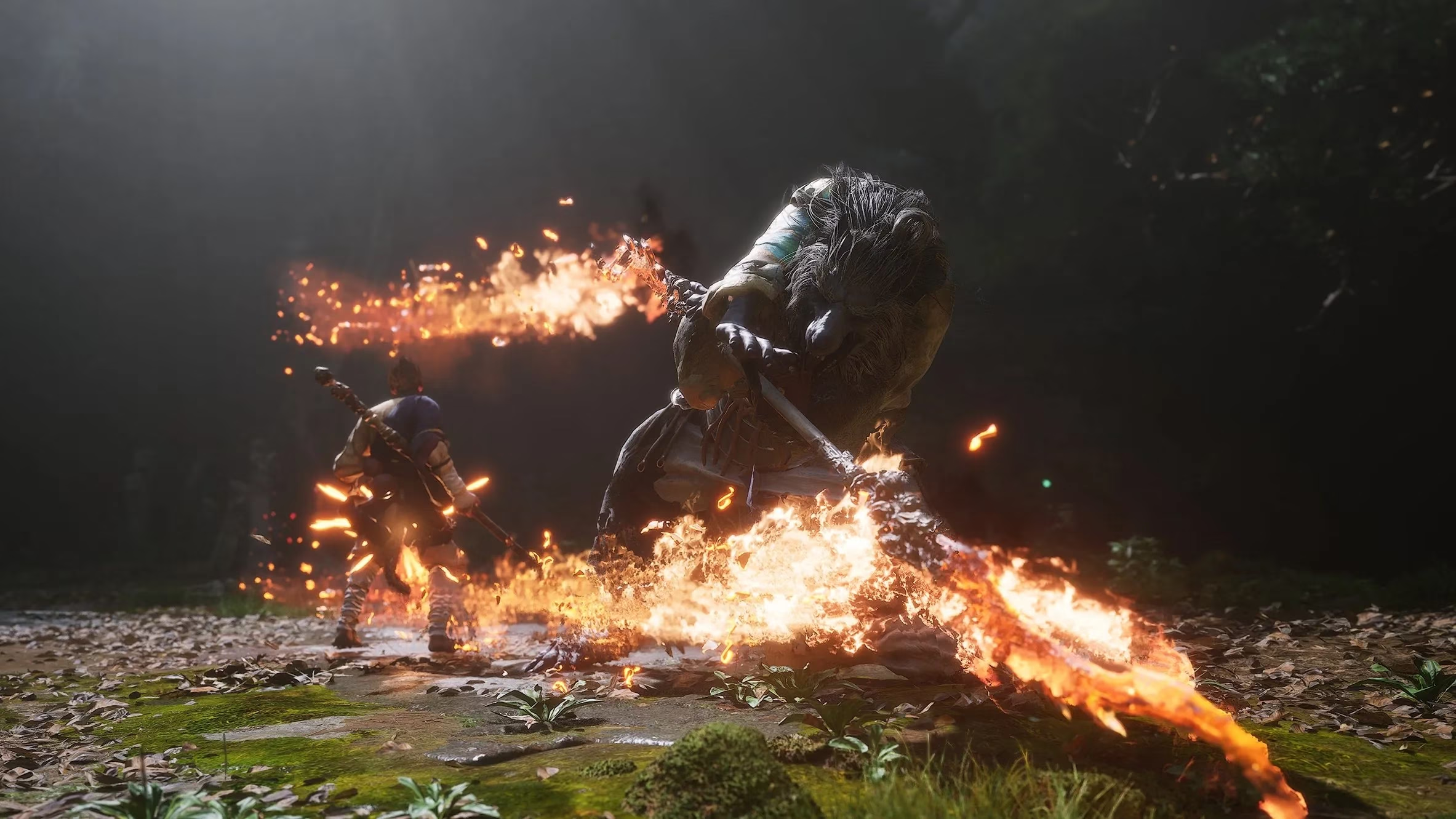
Sixty frames per second proved the final piece of the puzzle. Game Science had wrestled with the Xbox Series S optimization for a full year, and the smooth, buttery performance on both consoles validated every month of delay. Daniel’s journey across the game’s six chapters clocked in at 42 hours with a healthy dose of side questing – right in line with HowLongToBeat’s average of 38 to 39 hours for the main story. Completionists could easily push past 67, diving into hidden areas and collecting every Spirit Skill, each one a brief but stylish offensive tool that cost Qi and granted passive bonuses. By 2026, as Daniel rolled credits and immediately dove into New Game Plus with his entire arsenal intact, Black Myth: Wukong had cemented itself as an Xbox essential. It was no longer the myth of a missing version, but a tangible, exhilarating saga that rewarded patience with a legendary pilgrimage.