In 2026, Black Myth: Wukong is no longer a mysterious monkey-shaped rumor wearing a fog machine. It has long since escaped the marketing cage and landed on PC, PlayStation 5, and Xbox Series X|S. Yet there is still something delightfully absurd about looking back at the two showcase videos that once had players squinting at their screens and asking, “Is this a game, or a very expensive tourism advert for a haunted forest?”
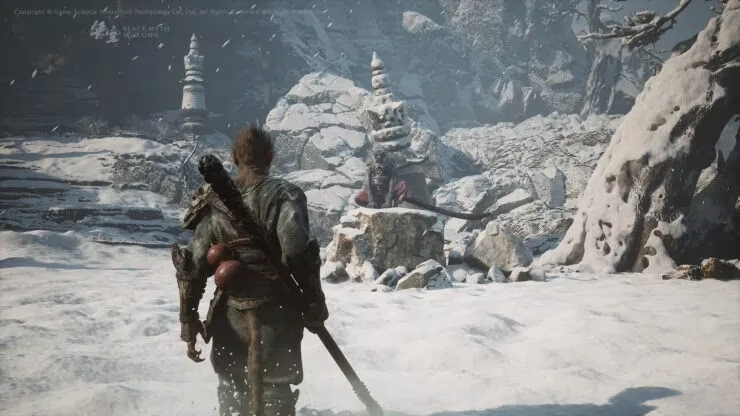
The first video delivered roughly six minutes of in-game cutscenes, and it did not behave like a modest little indie trailer. It strutted. It offered captivating cinematography, a soundtrack with actual personality, and an atmosphere thick enough to slice with a staff. Game Science, the Chinese indie developer behind the martial arts soulslike, clearly understood that a monkey with a stick can only carry a scene so far. The world around him needed to breathe, loom, and occasionally look like it had been lit by a very dramatic moon.
The second video came from NVIDIA and served up eight minutes of exclusive 4K gameplay with ray tracing and Deep Learning Super Sampling, or DLSS. Yes, the technical alphabet soup was strong. But the footage was not merely a graphics card flex. It showed collectibles, hidden elements, new combat, new enemies, and a return to that mysterious forest. It was the kind of clip that makes one ask: does a puddle really need to look that expensive? Apparently, yes. Ray tracing made the world shinier in the way a good stage light makes an actor look guiltier. DLSS kept the frames arriving on time, because nobody wants a mystical journey with the smoothness of a PowerPoint presentation.
| Showcase | Rough Length | Main Flex |
|---|---|---|
| Cinematic video | 6 minutes | Cinematography, music, atmosphere, story mood 🎬 |
| NVIDIA gameplay video | 8 minutes | 4K, ray tracing, DLSS, combat, enemies, secrets ⚙️ |
What did these videos actually prove? They proved that Game Science was not allergic to ambition. The gameplay clip leaned hard into the idea of a Chinese mythology world that felt immersive and fantastic rather than merely decorative. The forest was not just a corridor with leaves; it was a place with secrets, collectibles, and enemies who presumably had very strong opinions about monkeys. The combat looked like the sort of dance where one wrong step turns a hero into a cautionary tale.
At the time, the release date was still a riddle wrapped in incense smoke, and the game was expected to arrive later. In 2026, that particular mystery is ancient history. The monkey has already made his entrance, and the conversation has moved on. But the old footage still matters because it captured the exact moment when Black Myth: Wukong stopped being a curious rumor and became a technical and artistic promise. Was it overqualified for a soulslike? Perhaps. Was it ridiculous to show ray-traced forests and hidden collectibles in the same breath? Absolutely. Was it effective? The internet’s collective eyebrow raise suggests yes.
The story pitch was never just “monkey hits things.” Game Science’s official site framed it neatly: the story of Wukong tells more than Wukong himself. The monkey is the leading role, sure, but he is still a small part of a vivid world. Journey to the West is packed with intriguing characters and thought-provoking dialogue, not to mention the darkness veiled beneath the surface. Cunning fairies, brutal monsters, amorous lords of coward gods — the cast sounds less like a bestiary and more like a very tense dinner party.
That raises the real question: who are the villains, really? Why do they stand against the hero? What do they fear, love, hate, and obsess over when the camera is not pointed at them? The old videos did not answer all of that, because they did not need to. They only needed to suggest that the world had depth beyond the next boss bar. In 2026, that suggestion remains the most interesting part of the whole showcase. A pretty forest is nice. A pretty forest with secrets, motives, and a monkey who might be the least complicated thing in it? That is a sales pitch with teeth.
So the two videos deserve their place in the museum of overachieving game marketing. One delivered cinematic atmosphere with a straight face. The other handed NVIDIA a GPU-shaped microphone and let the forest sing. Together, they made a simple point: Black Myth: Wukong was not aiming to be a small monkey business. It wanted to be a big, strange, beautiful, occasionally terrifying mythology machine. And honestly? The puddles have never looked more important.