In 2026, the gaming world still loves a good genre argument, and Black Myth: Wukong remains the monkey in the middle of one. The cheeky answer is simple: it is not a Soulslike. It is a third-person action RPG based on the classic Chinese novel Journey to the West, and it is not particularly hard. It flows more like the modern God of War games, with color-coded gear, character skill trees, and linear paths that occasionally open into half-open playgrounds. It is first and foremost an adventure, more inviting than punishing. But it does borrow one Soulslike trick: it hides a ton of content in the margins, including some of the best moments and most challenging encounters. A player can blast through it as a 20-hour boss rush, or spend over 40 hours hunting every boss, collectible, and NPC. Half the game lives in the margins, and that is both its charm and its trap. 🐒
Fast Facts, No Monkeying Around
| Fact | Detail |
|---|---|
| Release date | August 20, 2024 |
| Platforms | PC, PS5 |
| Developer and publisher | Game Science |
| Core vibe | Monkey magic, not misery |
| Difficulty | Firm but fair, rarely brutal |
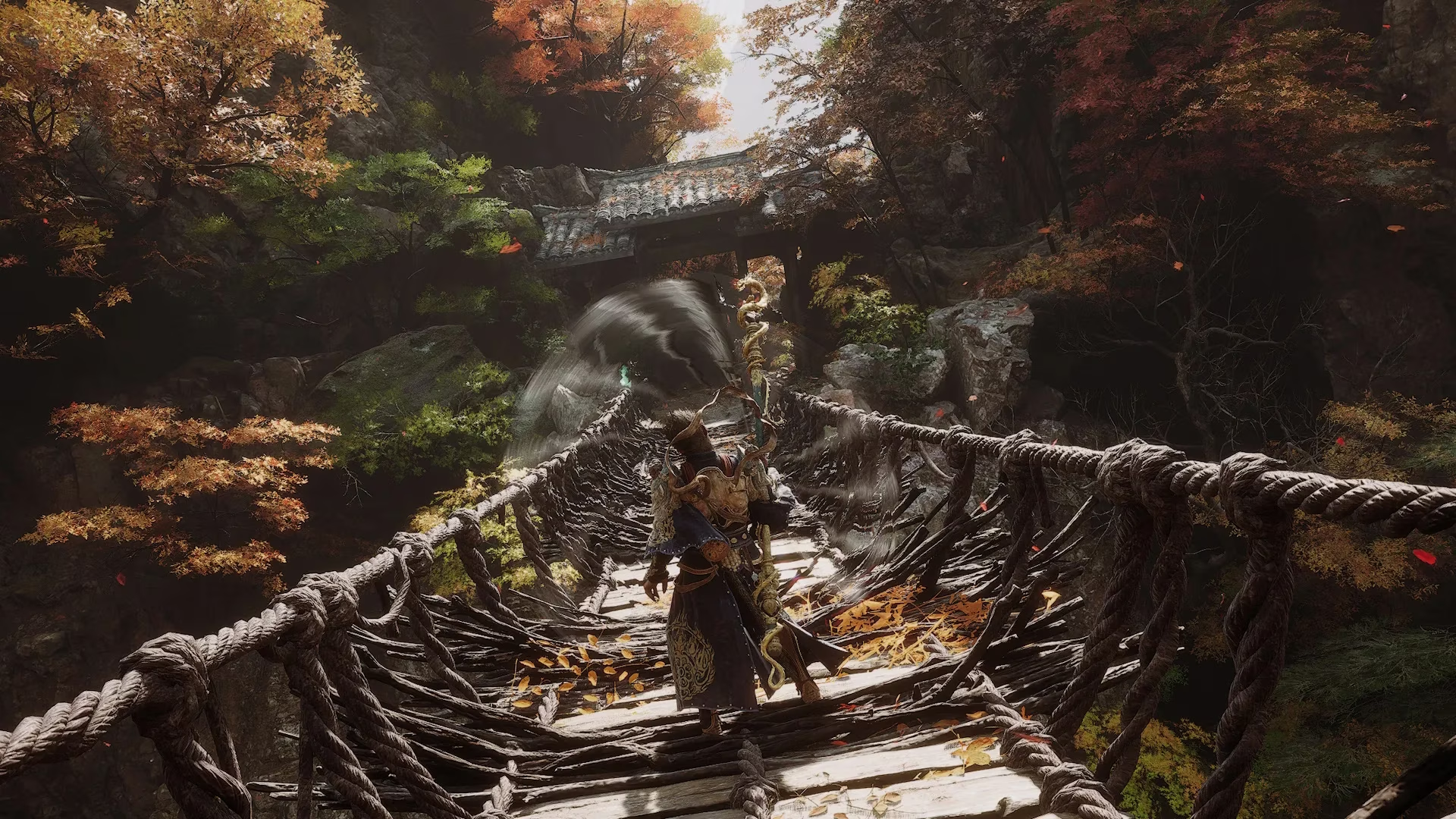
The player controls the Destined One, a staff-wielding monkey warrior following in the footsteps of the late legend Sun Wukong by collecting his six relics, or senses. That pursuit rolls through five main areas split into chapters, plus a special final one that is best left unspoiled. Each chapter has its own bespoke setting and subplot, and players can revisit them whenever they like. Collecting six MacGuffins is a suitably video game-y way to package a dense tale, and it is a welcome lifeline in what remains a heady experience. Black Myth: Wukong is less a story told to the player and more a sprinkling of parables left for them to find. It is a matter of verbs: this is one of those stories built for active interpretation over passive enjoyment.
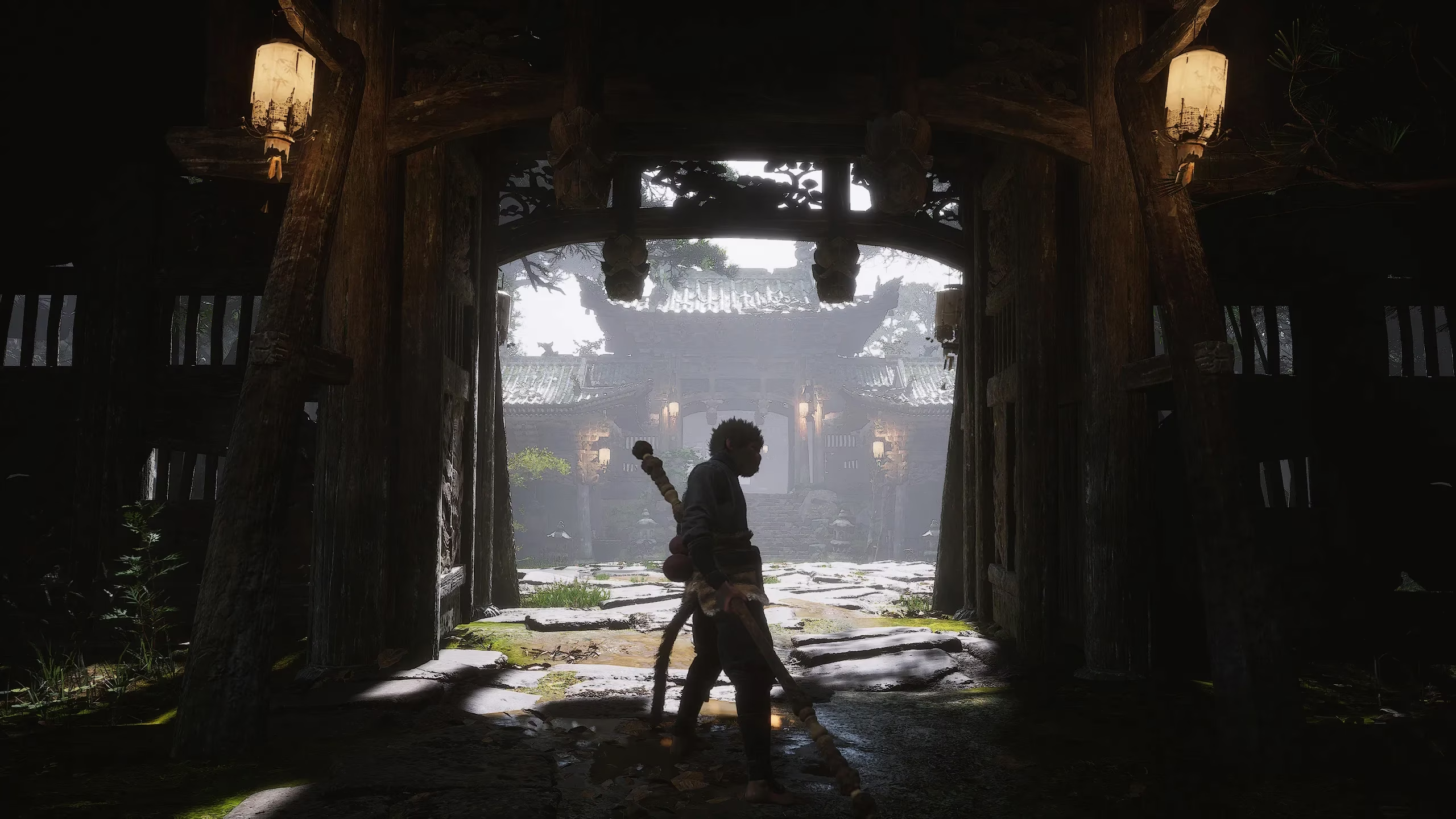
For anyone unfamiliar with the source text, it can feel like starting a book on page 200. One benefit is that the world feels lived-in. The player gets the sense of being a small part of a place where nobody can do everything alone, and the offhandedness of absurd events reinforces the mystical atmosphere. People shapeshift into foxes, cicadas, birds, or deceitful disguises with barely a shrug. That is just how this world of demons, deities, and immortals operates. The irreverence hits home through a cast that is almost universally larger than life. The Chinese voice-over is effective even for the most metaphor-heavy characters, making them properly likable or hateable as needed. It also makes the Destined One feel like a passive mute by comparison. The English voice-over is mostly fine, with a few standout performances, but it is less memorable overall.
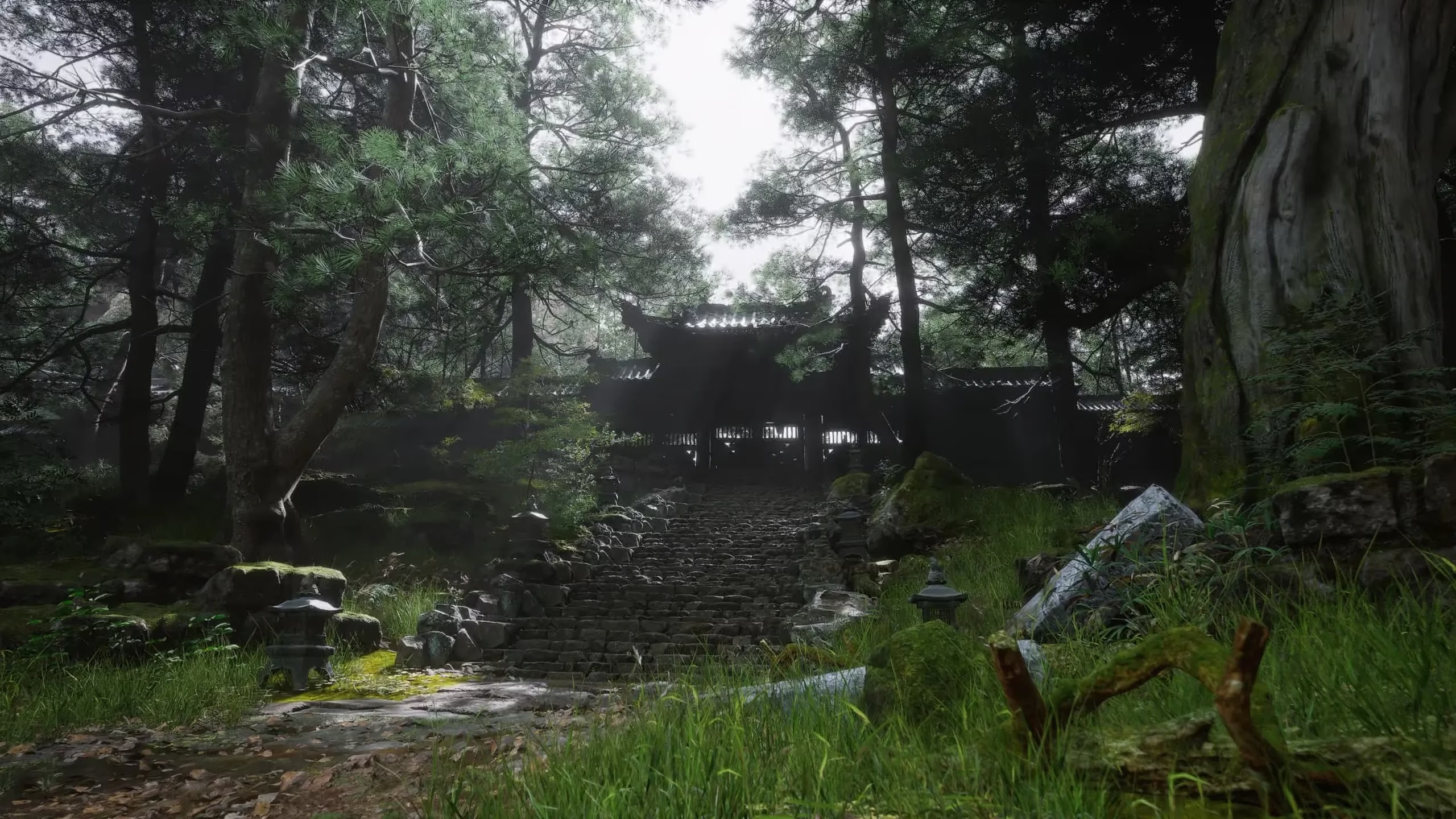
The presentation can be confusing, but the ending, or at least the ending this particular run reached, helps several details click into place. Even when the experience seems to wander off on a tangent, it is always eye-poppingly gorgeous. Rather than simply adapting Journey to the West as a story, Black Myth: Wukong reconstructs it as a space. Every area drips with detail: lively forests and quiet snowfields, intricate temples and rough-hewn crags. The question of what comes next becomes a powerful lure.
There is so much to see and explore, arguably too much to see and too little to explore. It is a stunning Unreal Engine 5 game capable of both stylized art and realistic graphics, but its visual language is terrible. Many levels are oversized, spreading encounters and collectibles too thin, and the world is littered with invisible walls blocking off what looks like navigable terrain. Where the player can and cannot go feels bafflingly arbitrary and limiting. That turns gorgeous environments into minefields of disappointment. Will there be a cool secret, or an inexplicable dead end? Over time, this blunts the joy of exploration. Many levels are also so visually cluttered that key items are easy to miss. A permanent health pickup locked in a tiny gold box on a tiny gold shrine in a dimly lit room flooded with particle effects is a dangerous thing to hide. Black Myth: Wukong is crying out for a map and clearer indicators like light beacons.
Staff, Spells, and Shameless Showmanship
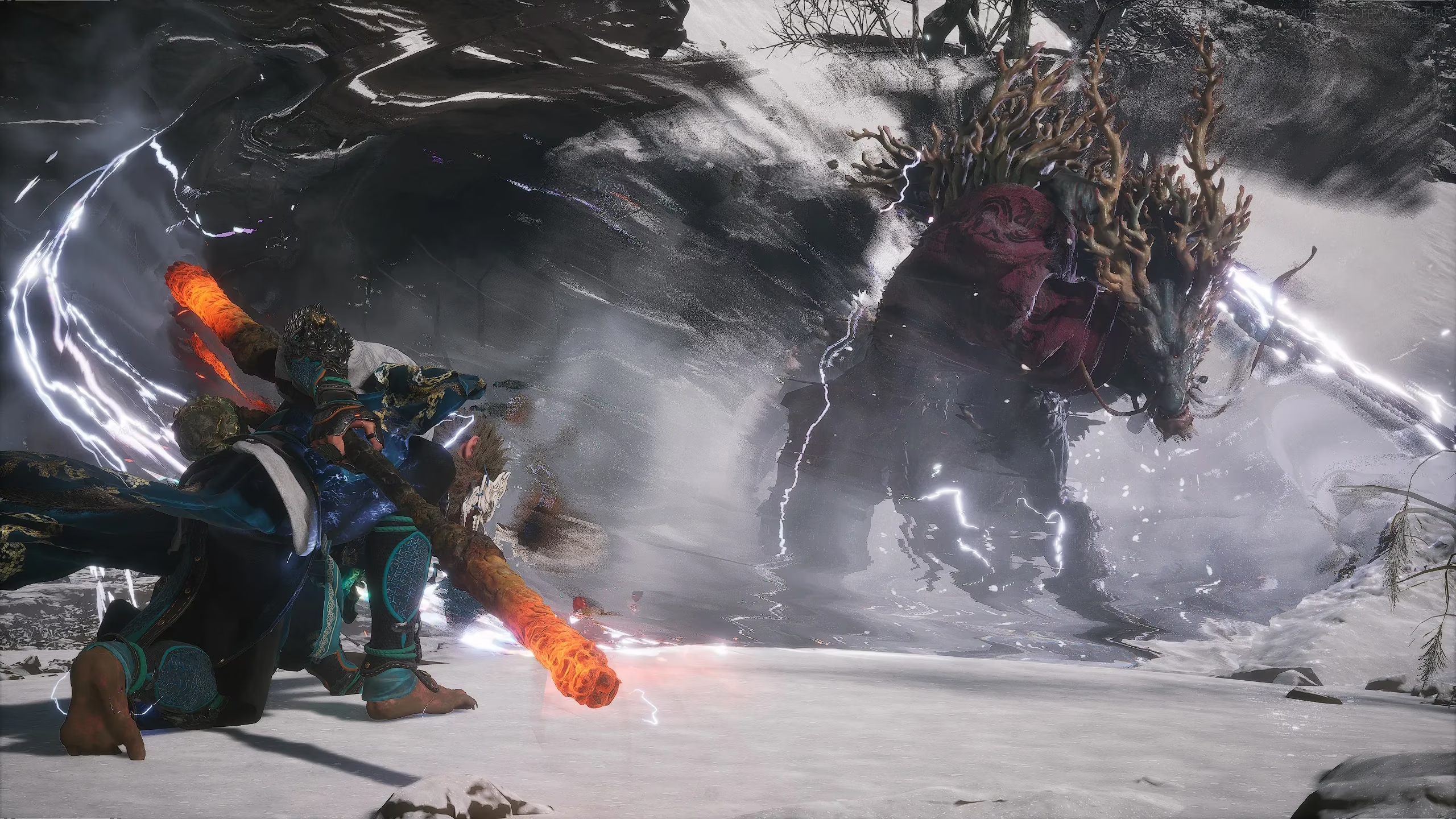
Apart from opening anything with a button prompt, the main concern while exploring is hitting anyone the camera can lock onto. The Destined One is a melee brawler whose fighting style revolves around fixed staff attacks and a suite of flexible spells. A shared light attack combo connects three staff styles with unique heavy hits. The default smash style spends Focus points on overhead slams. Focus is temporarily charged by holding the heavy attack button, or permanently charged by dealing damage, dodging attacks, and fighting skillfully. The pillar style sends the Destined One aloft, out of reach of ground attacks, with Focus attacks prioritizing area-of-effect sweeps. The thrust style is the favorite for many: fast and far-reaching lunge heavy attacks, plus a mid-combo dodge that can chain into an invincible follow-up. It is as good as it sounds.
New moves come from spending ability points in a skill tree broken up into core stats, staff styles, and spells. Most points are earned by leveling up through XP collected from defeated enemies, which is separate from the Will currency spent at merchants, but some points come from meditation spots found throughout levels. Players can redo all their points for free at any checkpoint, which is a huge quality-of-life win. Changing builds frequently to experiment with different moves and lean into specific armor or staff effects is easy and encouraged.
The first half of the game creates a serious hunger for skill points, but maxing out one staff style and sticking to it soon feels optimal. Combat would benefit from more interplay between the three styles. Once thrusting style is unlocked, there is little need for anything else. Pillar style feels clunky, and smash seems like a worse thrust. Each style also has only a few nodes for new attacks, and there is sadly no way to expand the light attack combo, so players should prepare to see the same attack animation about a million times.
Combat gets a little same-y. Many normal enemies are so slow, weak, or easily staggered that they are non-threatening. But chaining Focus heavies and slow-motion perfect dodges is so dang fun that boredom never gets close. Sound design puts in a lot of work. The woody thunk of a staff battering a shield, the resonant gong of cracking iron-skinned monsters, and the glassy swish of spinning around a boss in slow motion all land in the heat of the moment. They feel like tiny rewards for playing well, and they make duels more impactful.
Black Myth: Wukong is at its best in boss fights. There are dozens and dozens of bosses, sometimes back-to-back, and most are real spectacles. Some are rehashed, but the audio-visual feast is delightful. Levels sometimes feel like mere appetizers before the next boss. Most bosses fall on the first try. To put the difficulty in perspective, the final boss took two attempts, and the hardest optional boss found took seven or eight. That is not the resume of the God King of Space, so as said before, this game is not very hard. A few bosses do seem to be packing comically bad hitboxes. The thing that killed the Destined One most was a frankly horrific platforming section, thankfully the only one of its kind.
Despite an underwhelming skill tree, there is deep character progression. Armor set bonuses pair with gear upgrades that keep favorite outfits around, boosting stats and subtly changing appearance. A double two-piece armor setup that grants extra Focus from perfect dodges and a parry-style spell called Rock Solid is a tasty option. The healing gourd refills whenever the player rests, and it can be upgraded for more uses and customized through different drinks and soaks. Some drinks heal for less but come with an attack buff or mana refill, while soaks can make the gourd heal extra, mitigate status effects, and more.
Base health, mana, and stamina rise through items primarily found after bosses, and collectible stones can further boost chosen stats and be reallocated whenever the player wants. Staffs can be upgraded almost Monster Hunter-style using parts from bosses. Equippable accessories called curios bring boosted stats, conditional attack buffs, and more. Gathered materials craft medicine to temporarily boost stats or cure statuses. Keeping a stock of medicine for damage reduction, attack boost, and max health boost is not hard, and these become boss fight snacks. And that is before the magic.
Spells have cooldowns and cost mana, which is generally only refilled when resting at a checkpoint, so rationing spells matters. Rock Solid is the GOAT, but Immobilize is also a big favorite. It freezes enemies in place for several seconds and, with upgrades, increases the damage they take. Immobilize works on bosses, by the way, and it is even stronger than expected. It is free damage, obviously, but also a guaranteed moment to heal and a way to interrupt some problem combos. It is also the first spell unlocked, which sets the bar high. There are a few options for spell slots, with quite a few spells tied to optional content. Equipped spells can be changed at checkpoints, but stubbornly clinging to time-stopping and pseudo-parrying in this proudly dodge-focused game is a hard habit to break.
The most varied spells are the transformations. Proper transformations let the Destined One fight as vanquished enemies for a short time, dealing damage without getting hurt because these alternate forms have their own HP. Lesser, equippable spirits provide passive stat bonuses and function as special attacks tied to a Qi meter. Spirit attacks can sneak into normal staff combos. Only five transformations were found in one run, but nearly 50 different spirits turned up, and there are surely plenty more of both. There is a running theme of harnessing the strength of enemies, and this brings welcome variety to fights. A regular rotation might open with Immobilize, get in a staff combo, finish with a spirit, then launch right into a transformation. Players can spend most of a boss fight playing as anyone but the Destined One if they invest into transformations.
The first two chapters are absolutely lovable, but recurring annoyances and some drawn-out sections begin to wear thin around the halfway point. Combat carries the experience, the story is interesting albeit too fragmented to put anyone on the edge of their seat, and the world is a wondrous place to be. It is exciting to see such a rich setting, which has gone largely untapped in games, treated with clear love and care by an action RPG of this scale. Despite some frustrations, Black Myth: Wukong feels great and finishes strong, so strong that New Game Plus becomes a tempting little banana. In 2026, it is still a rock-solid action RPG with dozens of fantastic bosses in an absorbing, refreshingly weird world. Just bring a map, a snack, and a little patience for invisible walls. 🍌