In 2026, Black Myth: Wukong is no longer a shimmering promise in a trailer-shaped bottle. It is a full-fledged action RPG that has already stomped through consoles and PCs, collected awards, survived patches, and inspired a thousand think pieces about Chinese mythology in games. The premise remains as delicious as ever: Game Science takes the legendary Sun Wukong, the Monkey King from Journey to the West, and hands his mythic legacy to a new protagonist, the Destined One. The result is a retelling and reimagining that feels like a museum where the exhibits have escaped their glass cases and developed strong opinions about trespassing. Mythology has always been prime fuel for games—Greek gods, Norse gods, and every other pantheon with a PR department—but Black Myth: Wukong carves its own niche by diving deep into Chinese lore with a gritty, detailed visual style.
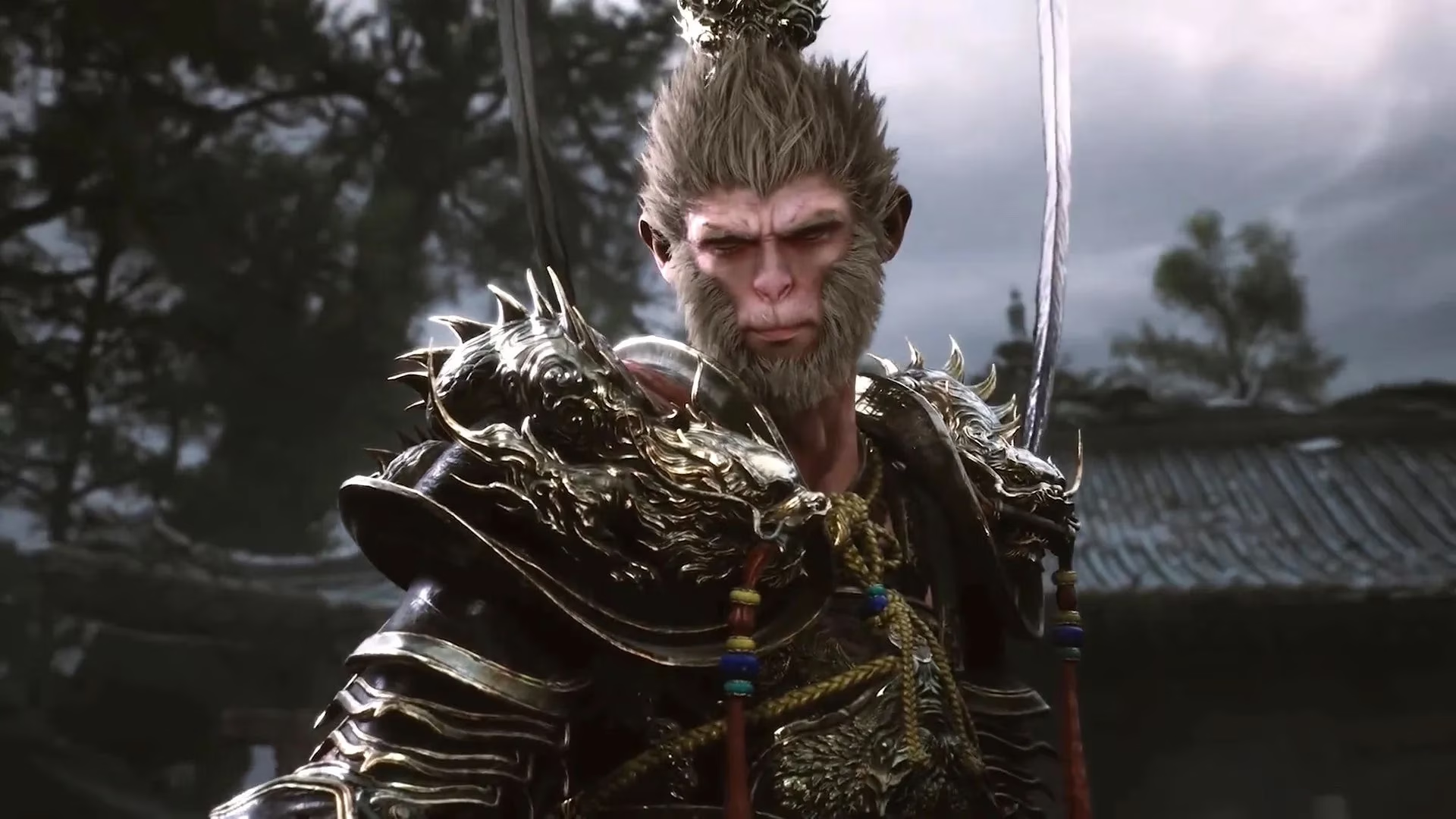
🐒 The Destined One and the Art of Not Being a Monkey
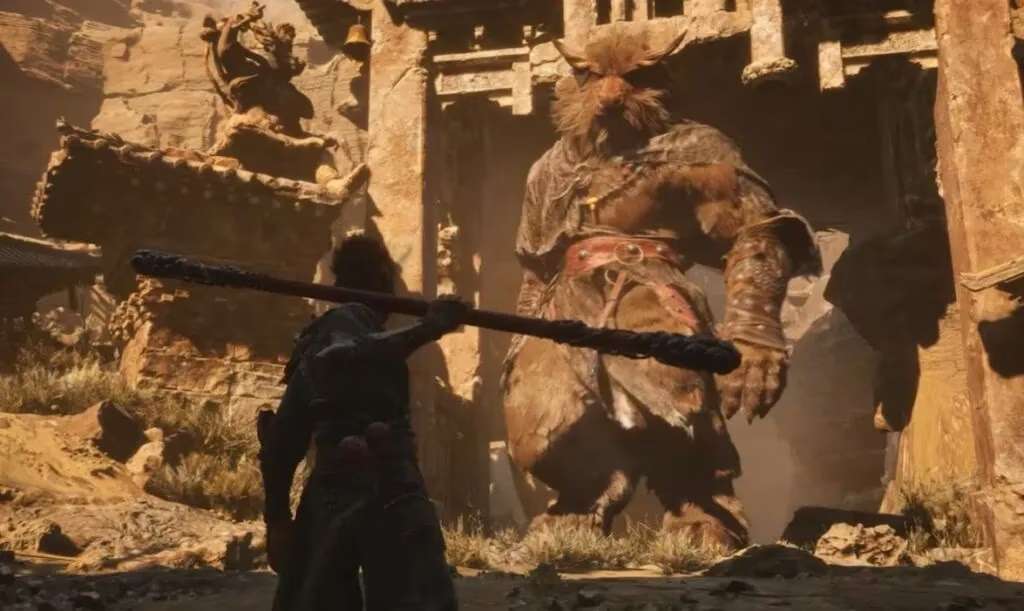
The player is the Destined One, a character who travels the land to uncover the truth behind a legend. That sounds noble until one remembers that every legend in this realm seems to have teeth, claws, and a personal grudge against visitors. What is Journey to the West without conflict and struggle? A very short sightseeing tour, that is what. Instead, the Destined One wields a mighty staff and defeats all manner of foes. Many enemies come directly from the mythological tale, while others exist because someone at Game Science thought, 'Wouldn't it be fun if this thing tried to kill you?' It is a valid design philosophy, and it works.
The key detail—and one that makes mythology nerds sit up straight—is that the game gives players the full, more-or-less accurate abilities of Sun Wukong. The staff can block attacks, create a shield of protection, or warp into devastating damage. It is less a weapon and more a sentient Swiss Army knife that attended a monastery and now quotes sutras while breaking ribs. In the lore, the staff was something only the Monkey King could wield, and he could transform it into anything he wanted—even a tiny toothpick stored behind his ear. The trailer even shows that last part, which is the kind of deep-cut fidelity that makes a fan's heart grow three sizes.
🎨 Chinese Themes, Gritty Visuals, and Music That Means Business
Black Myth: Wukong fully embraces Chinese themes and styles, complete with music that sounds like it was composed by a scholar who moonlights as a demolition expert. The visual style is gritty and detailed, but not grim for the sake of grimness. It uses texture, architecture, and costume to build a world that feels lived-in, worshipped, and occasionally set on fire. The game also promises—and by 2026 has largely delivered—characters of every kind for the Destined One to interact with. As players learn from them, they weave together the tapestry of the world through their tales. Who are these people? What makes them special? What can be learned from them? These are the questions that turn a boss rush into a mythology seminar.
📜 Why It Still Matters in 2026
| Element | Why It Works |
|---|---|
| Sun Wukong's abilities | The staff feels versatile, not gimmicky. Blocking, shielding, and warping give combat a mythic rhythm. |
| Chinese mythology | It avoids generic fantasy soup and serves a specific cultural feast. |
| Visual detail | Gritty textures and lush environments make every location feel like a painting with a body count. |
| Character interactions | NPCs and enemies add lore, mystery, and the occasional existential crisis. |
| Music and style | The soundtrack and art direction commit to the bit, and the bit is glorious. |
The Destined One's quest is like being handed a library card to a library where every book wants to fight you. That may sound exhausting, but it is also the point. Black Myth: Wukong reimagines a beloved legend without sanding off its strange edges. It lets players feel powerful, vulnerable, curious, and occasionally foolish—sometimes all during the same boss fight. In 2026, with the game's initial release behind it and its post-launch life still humming, it remains a standout example of how to adapt mythology without turning it into wallpaper.
So for anyone looking for another mythological adventure, there is good news: they will not have to monkey around for long. The game is already here, it is already loud, and it already has a staff that can turn into a toothpick. If that is not an endorsement, what is?