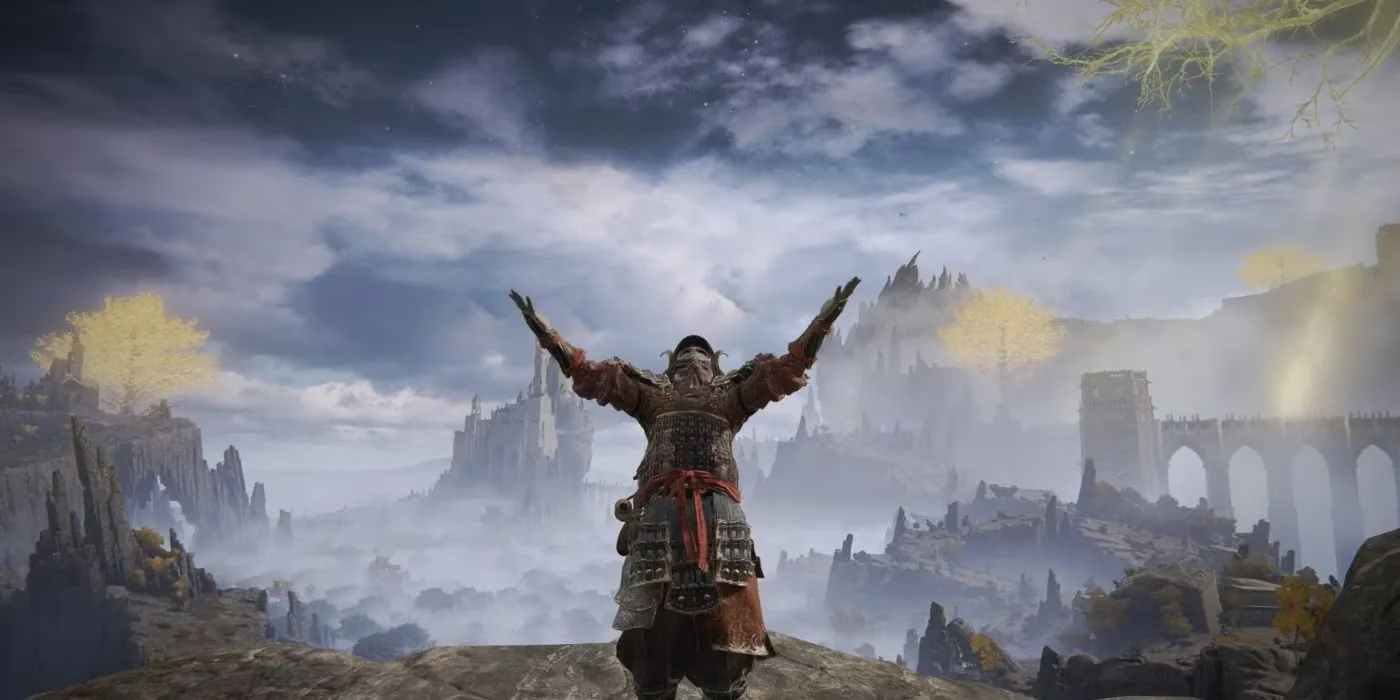
When Black Myth: Wukong emerged in 2024, gamers instantly drew parallels with FromSoftware's legendary titles like Elden Ring. Yet beneath its challenging combat lies a deeper kinship—one that transcends mechanics and dives into the very soul of storytelling. Much like Elden Ring, Wukong unfolds in a world long past its golden age, where ruins whisper forgotten glories and every moss-cracked stone holds echoes of lost dynasties. This isn't just another action RPG; it's a pilgrimage through time itself, where players become archaeologists of myth in a landscape that feels like shattered porcelain vase—once exquisitely whole, now held together by the golden seams of memory and legend.

The Beauty of Decay: Worlds Beyond Their Prime
At first glance, Elden Ring and Black Myth: Wukong seem worlds apart—one born from George R.R. Martin's dark fantasy, the other rooted in Chinese folklore. Yet both masterfully harness the poetry of collapse. Elden Ring’s Lands Between thrived millennia before players arrive, just as Wukong’s journey occurs centuries after Sun Wukong’s original tale. This deliberate ‘afterstory’ framing transforms environments into silent narrators:
-
Crumbling temples where gods once walked 🏯
-
Forests choked with spiritual residue 🌳
-
Bosses guarding relics like ancient monoliths—weathered sentinels of a bygone era
By setting games in faded glory, both studios create haunting atmospheres where discovery feels earned. As Hidetaka Miyazaki proved with Dark Souls’ fading fire, decay isn’t defeat—it’s atmosphere weaponized.
Why Wukong’s ‘Afterstory’ Works Better Than Direct Adaptation
Black Myth: Wukong cleverly sidesteps a straight retelling of Journey to the West. Instead, you play as the Destined One—a spiritual successor to Sun Wukong. This choice isn’t random; it liberates the game to prioritize what it does best: boss battles. Imagine trying to cram epic duels into a rigid narrative! Freed from source material constraints, Wukong delivers:
| Feature | Benefit |
|---|---|
| Non-linear arcs | Focus on jaw-dropping encounters |
| Flexible lore | Room for creative twists (e.g., Headless Monk) |
| Pacing control | Lets combat shine without plot interruptions |
Occasional disjointed scenes exist, but they’re rare—like static between radio signals from a celestial realm.
Journals Over Cutscenes: The Delicate Dance of Story & Gameplay
Wukong’s narrative brilliance echoes FromSoft’s ‘show don’t tell’ philosophy—but with a twist. While Elden Ring hides lore in cryptic item descriptions, Wukong offers robust Journal entries. These aren’t throwaway collectibles; they’re lore tapestries woven with threads of silence, where unsaid words resonate as powerfully as clashing staffs. This approach:
-
🎮 Keeps gameplay momentum razor-sharp
-
📖 Rewards curious players with deeper myths
-
💫 Gives bosses mystique—their presence alone tells stories
It’s a masterclass in balance: action drives the experience while lore simmers beneath, ready for those who seek it.
Echoes That Define a Masterpiece
Characters like Chapter 2’s Headless Monk exemplify Wukong’s genius. He isn’t just a boss; he’s a sequel to Journey to the West’s untold chapters—a ghost haunting narrative gaps. Through such designs, the game mirrors Elden Ring’s greatest strength: making players feel like restorers of broken worlds. Every victory stitches fragments of history back together.
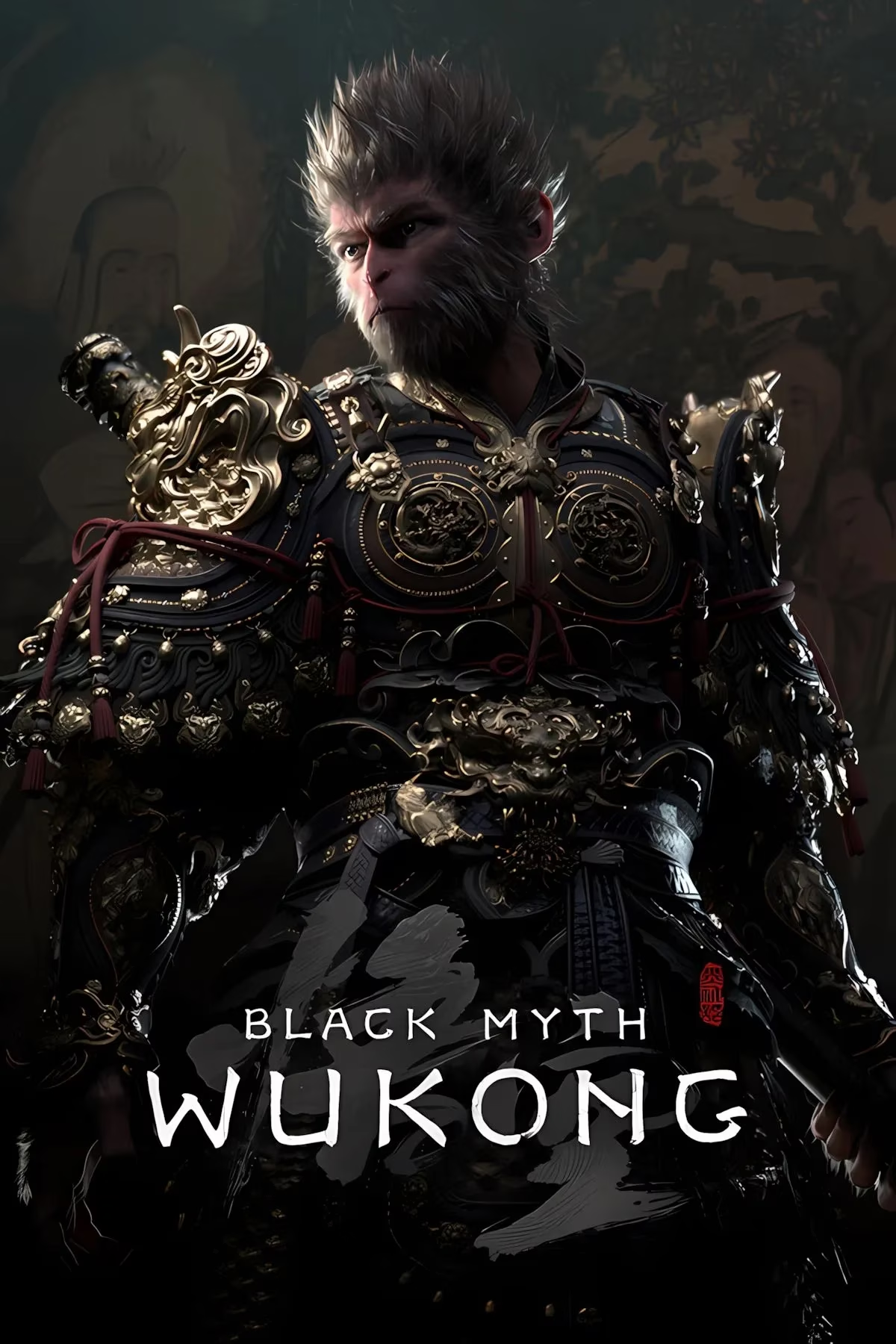
In 2025, we see how this ‘afterstory’ framework cemented Wukong as a modern classic. It proves some tales grow richer when told backwards—like wine decanted from its sediment, revealing depths only time can unlock. 🍷✨