The year is 2026, and the gaming world still trembles at the mere mention of Black Myth: Wukong. It has been nearly two years since Game Science unleashed this mythological masterpiece upon an unsuspecting public, yet the Destined One’s journey continues to set forums ablaze, break speedrun records, and haunt the dreams of the unprepared. What was once a humble 13-minute pre-alpha teaser has mutated into a cultural phenomenon so colossal that even the Buddha himself would pause mid-meditation. Gamers who thought they had seen everything—platinum trophies, no-hit runs, every secret boss conquered—still find themselves waking in cold sweats over that one transforming stone creature or the building-sized venomous toad that required 47 attempts. How can a game that isn’t even a true open world feel infinitely more alive than entire digital continents? How can a staff and three stances produce more depth than entire arsenals in other action RPGs? The answer lies in the perfection of the myth. Game Science didn’t just make a game; they resurrected an immortal monkey god and handed players control of his divine chaos.
What sorcery is this? A journey beyond the novel
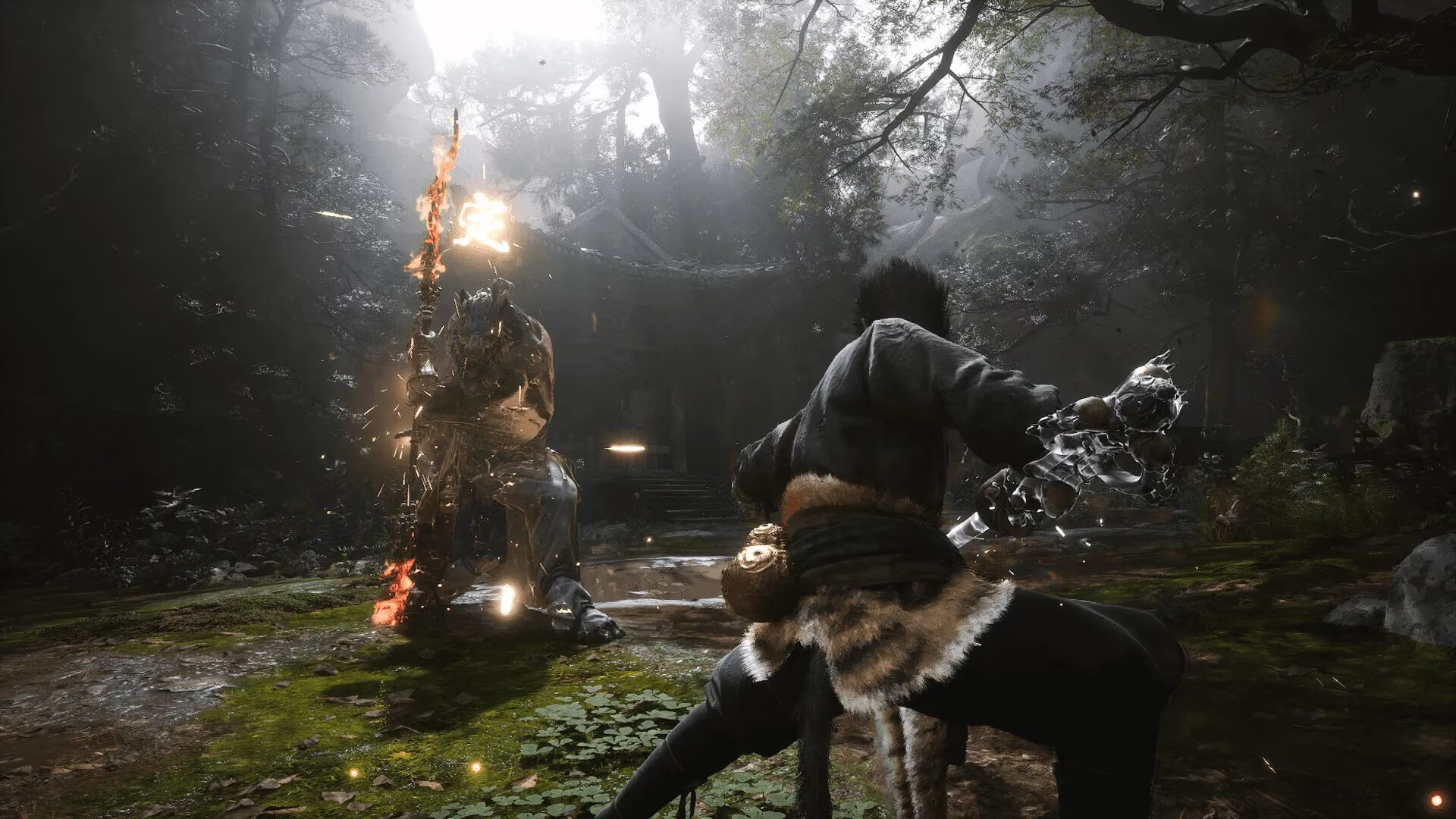
For anyone who has been living under a jade boulder, Black Myth: Wukong draws its soul from the 16th-century Chinese epic Journey to the West. But here’s the twist that makes scholars weep and gamers rejoice: the game’s plot picks up after the novel’s final page. The mischievous Sun Wukong, born from enchanted stone and punished by the Buddha for his astronomical arrogance, has completed his redemption arc—or so the scriptures claim. The Destined One, the player’s alter ego, walks a blood-soaked path to uncover the truth behind that redemption. Is the monkey god truly absolved, or is the cosmos just telling itself a comfortable lie? The narrative slithers through Buddhist imagery, Taoist mysticism, and folkloric terror like a dragon through mist. Players don’t need to read 100 chapters of source material; the game’s mature, sometimes horrifying retelling does all the homework for you, then sets it on fire with a flaming glaive.
The settings bleed authenticity. Black Wind Mountain, the Western Regions of 7th-century Central Asia, and other realms pulse with the kind of detail that makes you smell incense and feel temple dust on your skin. But beware: Game Science also seeds its world with original nightmares—demons and deities pulled from the darkest corners of Chinese folklore, their designs so vivid you’ll swear you saw them in childhood fever dreams.
Combat that laughs at the concept of a block button
Imagine a game where your sole defense is a dodge, your only true weapon a size-changing magical staff, and your margin for error is thinner than a cicada’s wing. That’s the reality of Black Myth: Wukong, a reality that has separated the celestial warriors from the mortal button-mashers since that fabled August 20 release. The Ruyi Jingu Bang staff is not a simple stick—it’s a conductor of chaos, capable of three distinct stances that fundamentally rewrite every battle.
The Smash stance is the default fury, a chain of light and heavy attacks that crescendos into ground-shaking combos. Watching an expert string together a 37-hit sequence while perfectly dodging a leaping lizard is like witnessing a violent ballet. Then comes the Pillar stance, which invites players to become the monkey they were always meant to be. The Destined One plants the staff into the earth, perching atop it like a gargoyle, completely immune to ground-based shockwaves. From that vantage, he can rain down a devastating plunging attack or spin around the staff, kicking wolves and demons in a 360-degree carnival of pain. Finally, the Thrust stance transforms the staff into a lightning-fast spear, closing gaps in an instant and piercing enemy defenses from ranges that feel borderline disrespectful. The sheer speed can make a katana-wielding tiger look like it’s wading through molasses.
But raw aggression drains stamina, and every perfectly timed dodge builds a focus meter that unlocks attacks so powerful they make bosses reconsider their life choices. No blocking exists here. Not now, not ever. The game dares you: Can you read the opponent’s soul in the fraction of a second before death?
The 72 heavenly tricks up a monkey’s sleeve
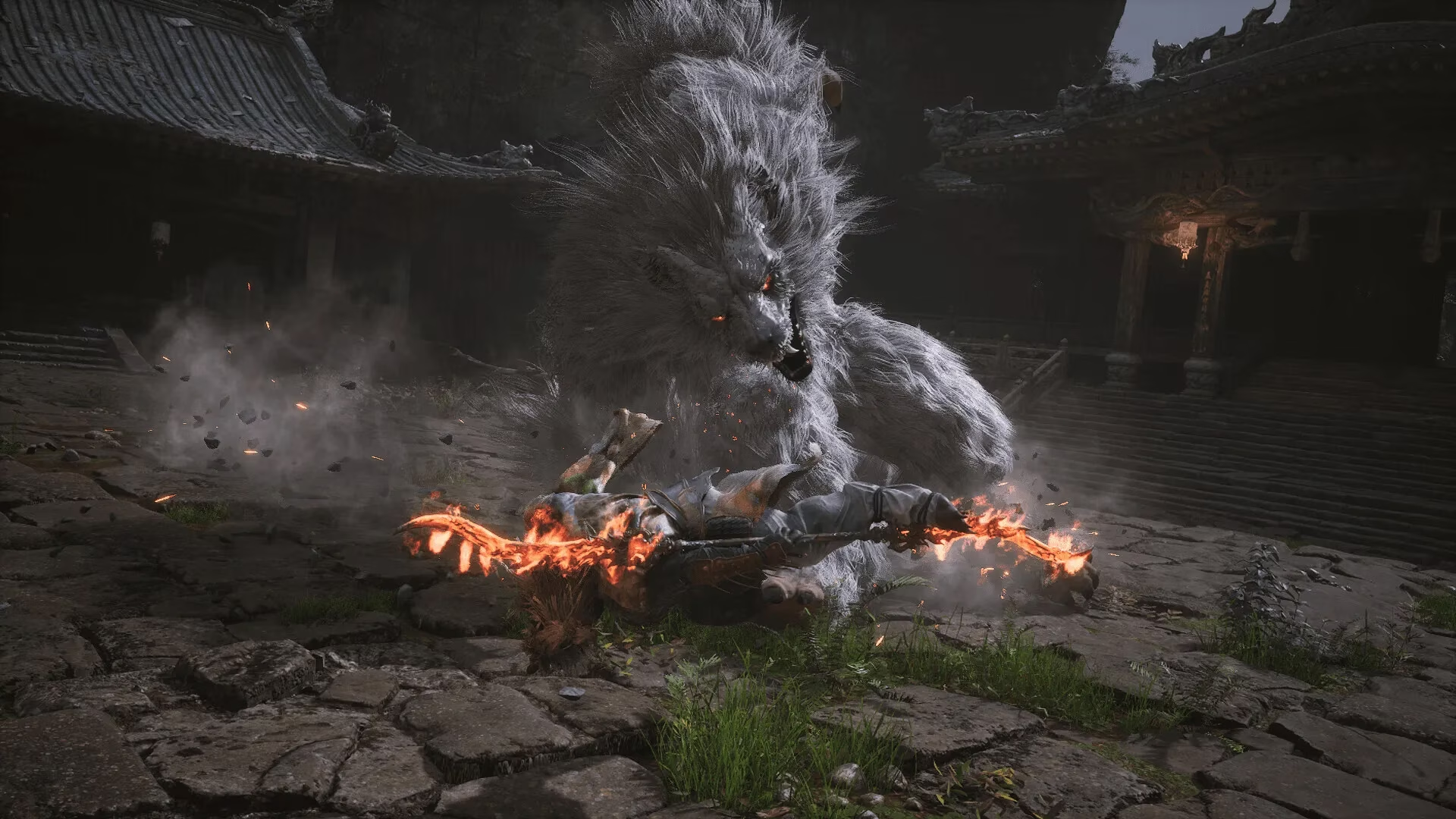
As if three stances weren’t enough to melt a player’s brain, the Destined One inherits fragments of Sun Wukong’s legendary 72 transformations. These are not cosmetic gimmicks; they are game-breaking, crowd-controlling, boss-erasing miracles. One moment you are a creature of living stone, laughing off attacks that would delete a lesser being. The next, you’ve become a monstrous feline apparition, swiping through enemy lines with claws that carve reality apart. The flaming glaive transformation—a fan favorite since the earliest trailers—turns the staff into a infernal whip of fire, and any enemy with a weakness to burning will learn what hell truly means. Freeze opponents in place, summon defensive barriers, or clone yourself into an army of duplicate Destined Ones who collectively beat your problems into submission. Some forms even come from previously defeated bosses, meaning every kill is a potential new body to wear. Is that terrifying demonic infant you just toppled? Congratulations, you can now be it.
Outside of combat, shapeshifting serves narrative purpose. Early on, players become a cicada, surveying a gorgeous and treacherous new area, the world humming with unseen dangers. One wrong buzz, and you’re swatted out of the sky. These moments fuse gameplay and storytelling so tightly that even the most jaded critics in 2026 still praise the design as “transcendent.”
Progression that respects your time, but punishes your greed
Black Myth: Wukong is not a soulslike—repeat that mantra during every loading screen. It is, however, an action RPG with teeth. Three skill trees (magic, staff stances, and character attributes) branch out like the roots of a celestial peach tree, all fed by Sparks earned through experience and meditation spots hidden in the world. Spend them your way. Want to turn the Pillar stance into an untouchable aerial fortress? Go ahead. Prefer magic that freezes time and shatters bosses? Do it. The game encourages experimentation because death only steals a tiny sliver of unbanked XP—a merciful design that has saved countless controllers from being hurled into walls.
Loot goblins will be in paradise. Hidden armor sets grant set bonuses that, for example, increase focus earned from dodging, synergizing with an evasive playstyle. The crafting system demands materials from smashed pots, glowing green Will pickups, and dismembered foes. Exploration is linear yet labyrinthine, each corner hiding an optional mini-boss, a secret weapon, or a meditation spot that raises your power ceiling. Skipping a side area feels like leaving treasure unclaimed in a dragon’s hoard. Why would anyone do that?
Bosses that stare into your soul and find it wanting
Every region’s final boss is an existential exam. By 2026, community lore has immortalized names like the Ancient Wolf God and the demonic infant with a thousand-yard stare. These encounters are not health-sponge marathons; they are rhythm games of death where reading attacks, switching stances mid-combo, and rationing transformations separate legends from casualties. Defeating them unlocks skills for your chosen stance, making the Destined One ever more terrifying. Optional mini-bosses lurk off the critical path, wielding rewards so tantalizing that completionists have collectively logged enough playtime to reach the moon.
The variety is shocking. One battle pits you against a wolf commander with a blade that cleaves the air, demanding impeccable dodge reflexes. Another, a venomous toad the size of a temple, spits poison and forces you to exploit Pillar stance’s verticality. No two enemies feel recycled because their visual and attack designs are pulled from a bottomless well of Eastern mythology. Game Science didn’t build a bestiary; they built a pantheon.
The studio that shook heaven and Earth
Game Science, a Hangzhou-based team once known for an RTS title, bet everything on this monolithic triple-A debut. The core founders, veterans of Tencent Games, poured their souls into the project. The result? A launch that shattered concurrent player records, a community that exploded across Bilibili and YouTube, and a “Black Myth” gaming universe now spoken of as inevitable. In 2026, with patches and expansions already enriching the core experience, the studio’s ambition has become a benchmark. They dared to ask: what if a game could be both a technical marvel on Unreal Engine 5 and a deeply respectful, uncompromising piece of cultural storytelling? The answer is Black Myth: Wukong, a game that didn’t just release on August 20, 2024 for PC and PlayStation 5—it colonized the collective imagination and hasn’t let go since. And honestly, who would want it to?